


 English
 Español
 Deutsch
 عربى

Home / News / Industry News / Carbon Steel vs Stainless Steel Screws: Strength, Corrosion, and Cost Compared
Industry News
Content
A coastal contractor once ordered a pallet of bright zinc-plated carbon steel self-drilling screws to save money on a railing job. Eight weeks later, rust bled down the posts and every screw head wore a powdery orange bloom. The rework cost more than the entire original fastener budget.
Carbon steel vs stainless steel screws looks like a simple price comparison, but it is really an engineering decision about three variables: exposure, mechanical load, and installed cost. This guide compares strength, corrosion behavior, pricing, and real application fit so you can specify the right screw the first time.
If the joint stays dry and carries a structural load, carbon steel with the right surface treatment is usually the stronger, more economical choice. If the joint faces moisture, chemicals, road salt, or coastal air, choose stainless steel — and choose the grade carefully, because not all stainless grades behave the same way.
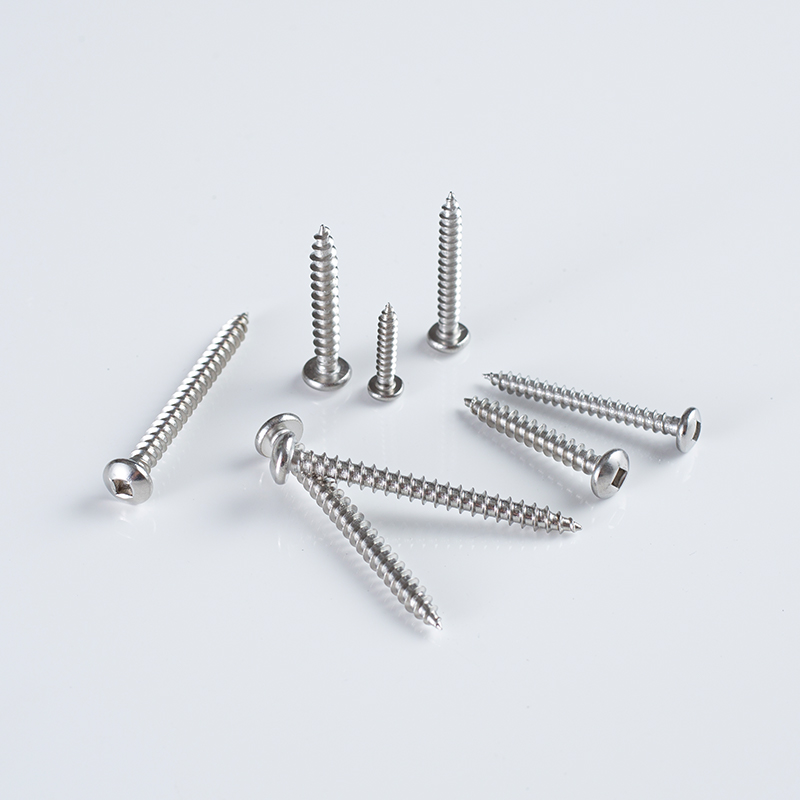
Carbon steel screws start as medium-carbon wire, then go through cold heading, thread rolling, and heat treatment. The hardening and tempering step gives them a combination of tip hardness and body toughness that ordinary stainless steel cannot reproduce. That is why most self-drilling and self-tapping screws are made from carbon steel: a screw that must cut its own pilot hole in thin steel needs a hard, sharp tip that will not wander on contact.
Austenitic stainless grades 304 (A2) and 316 (A4) cannot be hardened by heat treatment; they work-harden during cold forming. Their starting hardness is lower than a correctly hardened carbon steel screw, even though the thread becomes tough during rolling and driving. Martensitic grade 410, sometimes called "stainless iron," can be heat-treated, and you will find it in drywall and self-drilling products where a hard cutting edge matters.
Strength class matters too. On industrial fasteners, codes such as CL3 and CL4 identify the mechanical grade, and a CL4 carbon steel screw carries a considerably higher load rating than an unmarked decorative screw. For furniture frames, vehicle brackets, roof sheeting, and structural timber, that rating is the difference between a joint that holds and a fastener that lets go.
Bare carbon steel rusts, which is why carbon steel fasteners are almost always supplied with a surface treatment. Blue-white or yellow zinc plating, black phosphate, Dacromet, Ruspert, and zinc-nickel alloys each extend service life in a different exposure envelope. Salt spray hours are the usual shorthand: a standard electroplated zinc finish may pass not much more than 100 hours, while a Dacromet or Ruspert system is rated at 500 or 1000 hours. That gap is what lets a coated carbon steel screw serve in semi-exposed industrial positions where basic zinc would fail within a season.
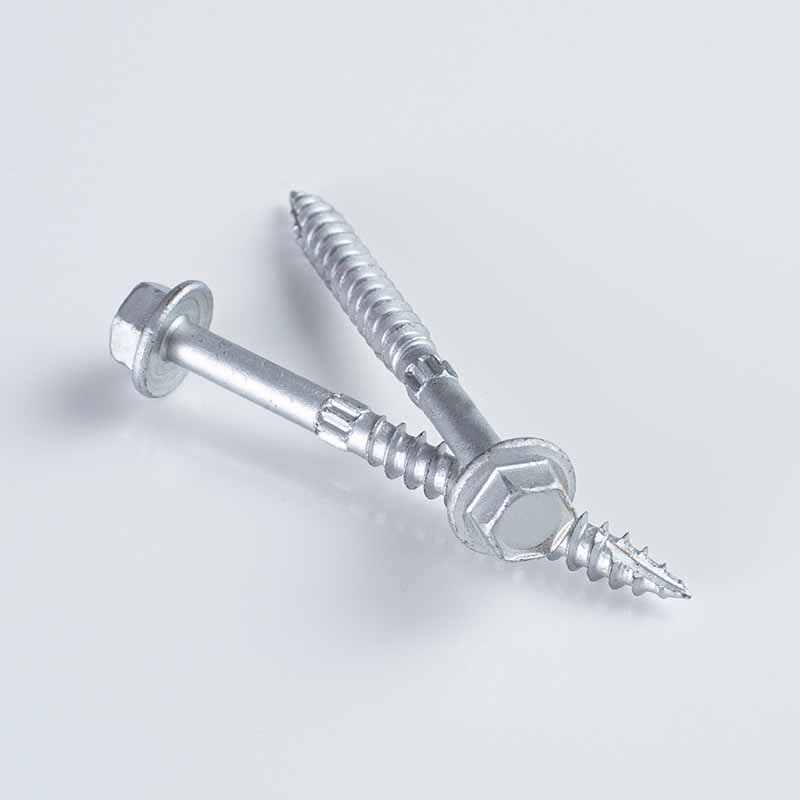 Dacromet-Coated T17 Hex Head Self-Tapping Screw for Severe ExposuresThis cold-headed carbon steel screw with silver Dacromet coating offers 1000-hour salt spray resistance, bridging the gap between basic zinc and stainless for coastal or industrial timber-steel fastening.View Product →
Stainless steel works on a different principle. The chromium in the alloy forms a thin, self-repairing oxide layer that blocks oxygen from the metal below; if the surface is scratched, the layer re-forms on its own. Grade 304 (A2) is the workhorse for damp and most exterior conditions, while 316 (A4) adds molybdenum to resist chloride attack in coastal, marine, and road-salt environments.
Stainless steel is corrosion-resistant, not corrosion-proof. A 410 screw still shows surface rust in coastal air, and a 304 screw driving into aluminum in a salt-water drip zone can corrode the aluminum. Specify the whole joint, not just the fastener.
On a typical wholesale quotation, the stainless version of a screw runs several times the price of the equivalent carbon steel product. That is the number buyers see first, and it is misleading in a corrosive environment. A small saving per piece is worthless when the screw seizes, stains the surface, or has to be drilled out after one season.
The best choice changes with the substrate, the climate, and the structural responsibility of the joint. This table is a practical starting point for most procurement decisions.
| Application | Recommended choice | Why it works |
|---|---|---|
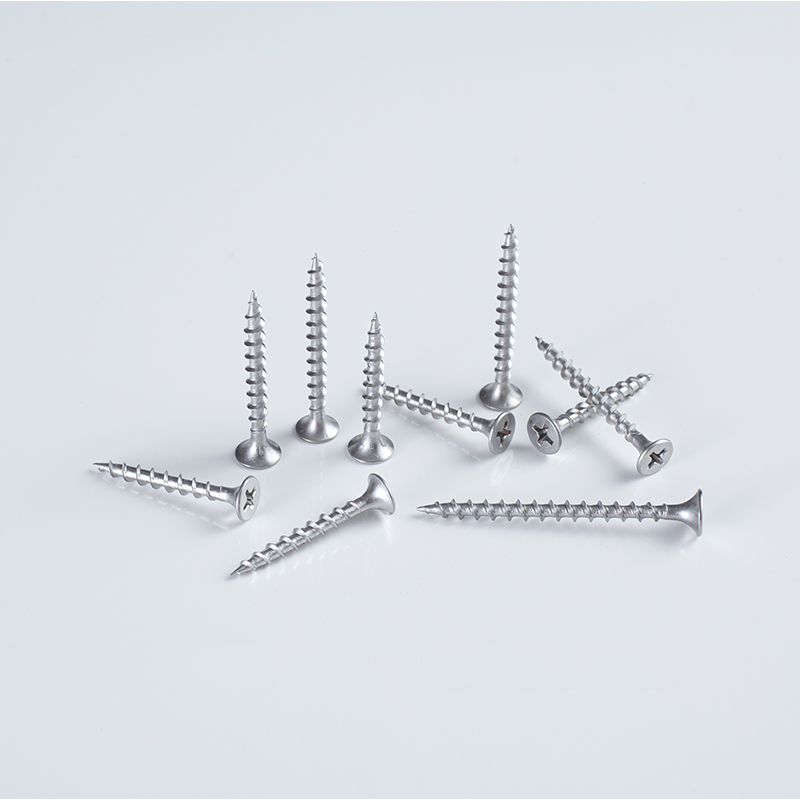
| Drywall on steel studs, dry interior | Carbon steel, zinc or phosphate finish | Good pull-out, fast driving, low cost |
| Basements and bathrooms | 304 (A2) or 410 stainless | Resists humidity without paying for 316 |
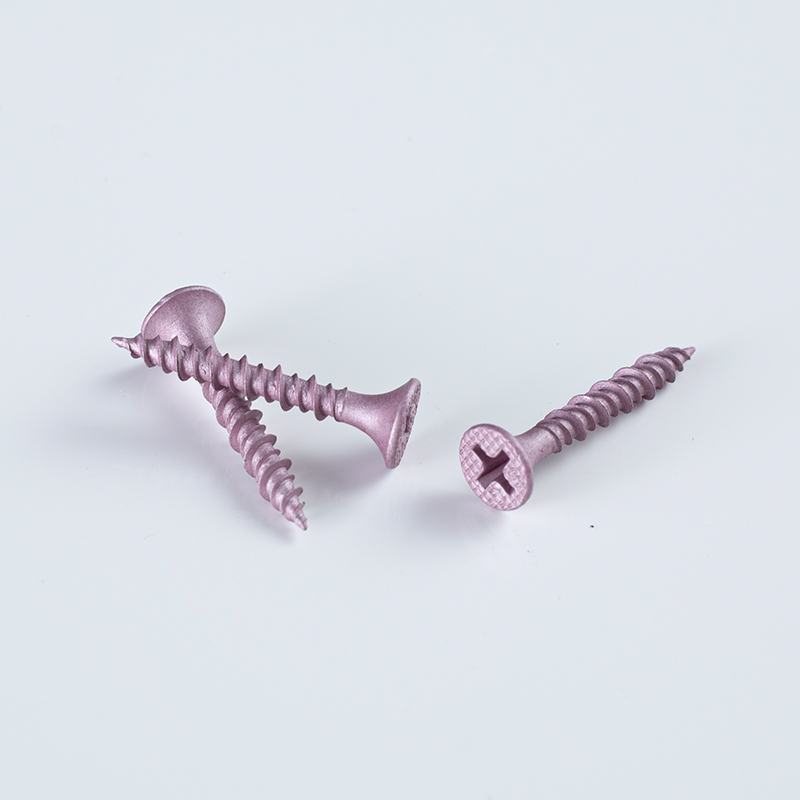
| Furniture and particleboard | Carbon steel, zinc or brass finish | Aggressive thread maximizes holding power |
| Outdoor timber and decks | 304 (A2) or 316 (A4) stainless | Treated wood accelerates rust in carbon steel |
| Coastal and marine projects | 316 (A4) stainless | Molybdenum blocks chloride pitting |
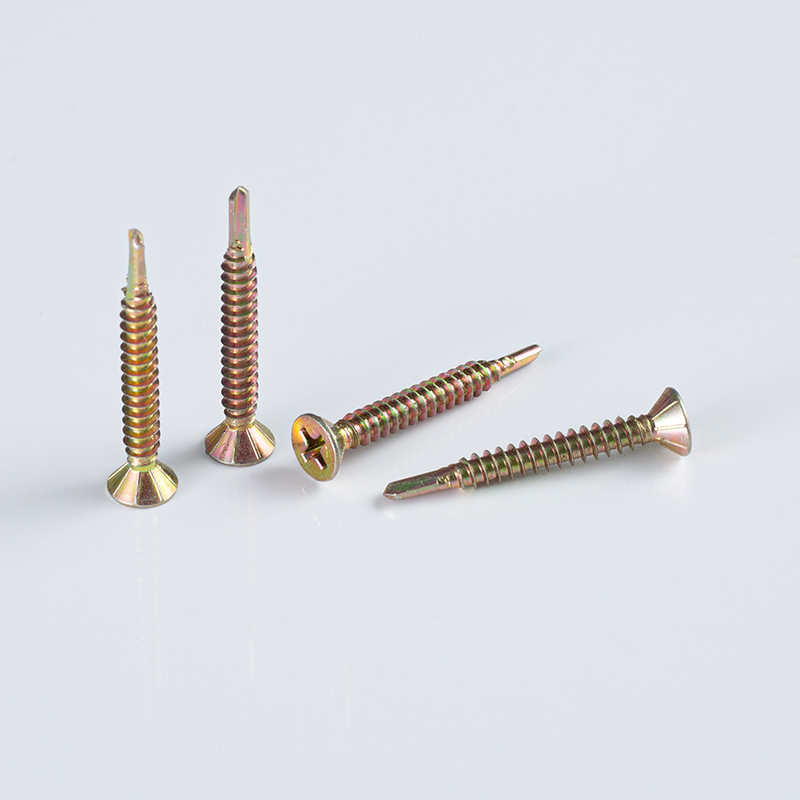
| Steel roofing and metal framing | Carbon steel self-drilling, Dacromet or Ruspert coated | Hardened tip drills steel; coating handles rain |
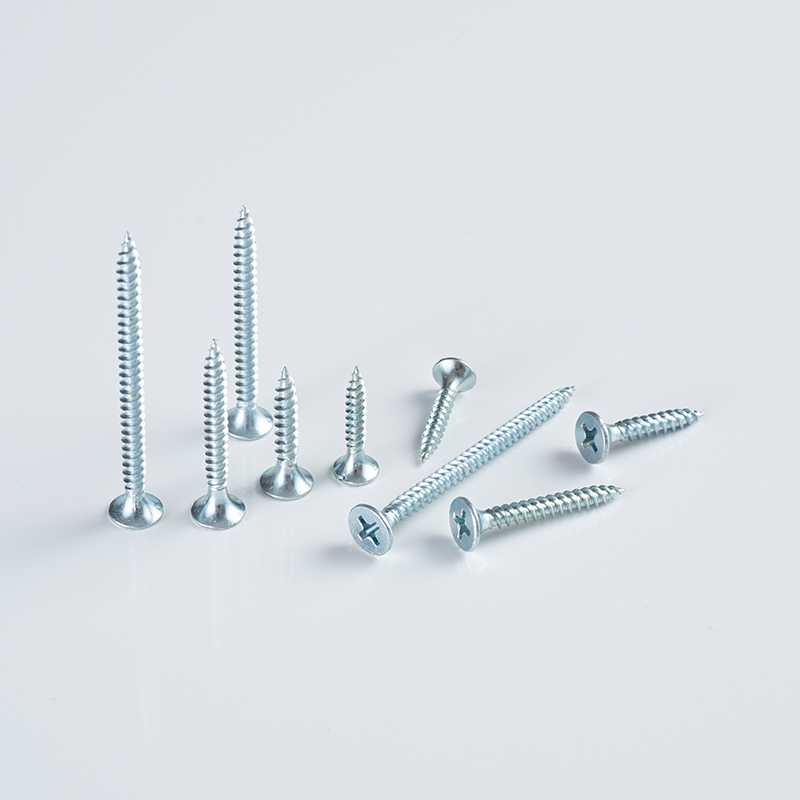
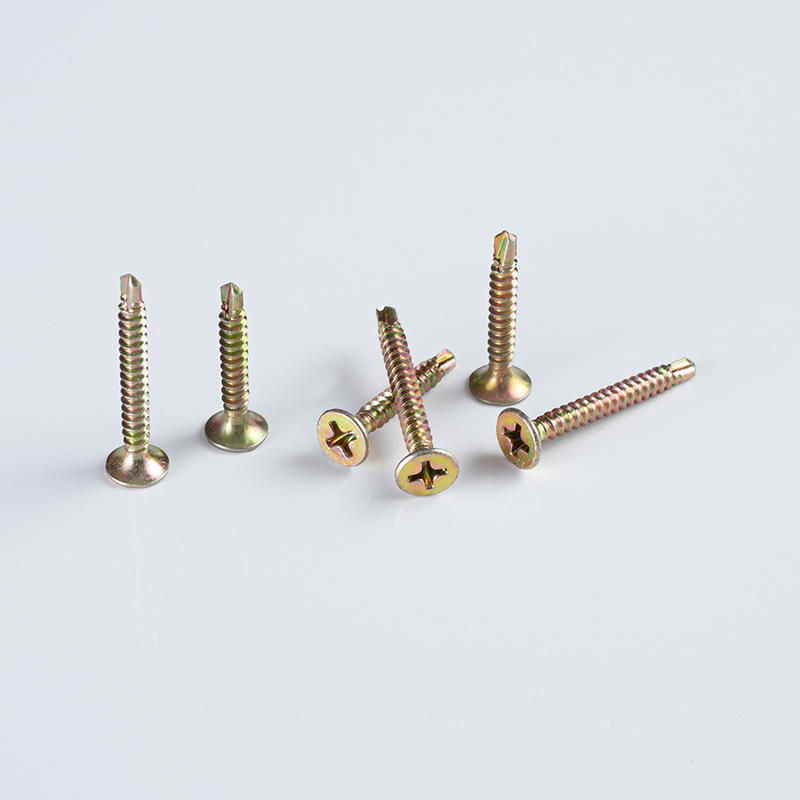 Yellow Zinc Self-Drilling Drywall Screw for Indoor Steel StudsA cost-efficient Phillips bugle-head screw with integrated drill point, suited for attaching gypsum board to light-gauge steel up to 1.8 mm in dry or mildly humid interior settings.View Product →
For standard interior metal studs, a yellow-zinc self-drilling drywall screw is the cost-efficient workhorse: it cuts through 0.5–0.8 mm steel studs quickly and holds gypsum board firmly, with no need to upgrade to stainless.
For timber exposed to weather and salt, the dependable option is an A4 stainless wood screw with a double countersunk head and Torx drive: it resists chloride corrosion, seats flush, and drives well in dense hardwood. Matching fasteners to marine and outdoor projects starts by checking the grade printed on the box, not just the description in the quotation.
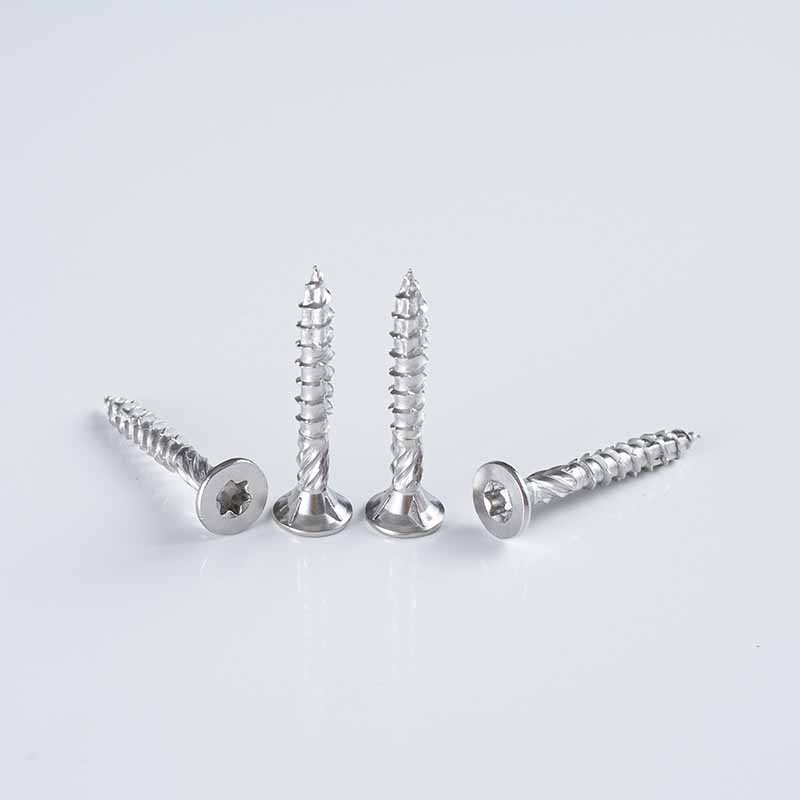 A4 SS316 Double Countersunk Torx Wood Screw for Marine TimberThis 316 stainless steel wood screw with square cone point and two-thread design resists chloride corrosion, making it the dependable choice for coastal decks, docks, and treated timber structures.View Product →
Yes, when the coating matches the exposure. A Dacromet or Ruspert system rated at 500 or 1000 hours of salt spray handles moderately corrosive conditions, but for coastal or continuously damp environments stainless steel is the safer specification.
304 (A2) works for inland and most exterior applications, but chlorides attack it faster than 316 (A4). For salt spray, seawater contact, or road de-icing salt, choose 316 stainless.
Martensitic grades such as 410 are magnetic. Austenitic grades 304 and 316 are not normally magnetic, although heavy cold working can create a slight magnetic response. If magnetism matters in your assembly, confirm the exact grade with the supplier.
Compared with a heat-treated carbon steel screw, standard 304 and 316 have lower starting hardness. That mainly affects the cutting tip in metal-to-metal work, which is why many self-drilling screws use carbon steel or 410 stainless tips instead.
The right choice always starts with the real service condition. A dry interior frame calls for an economical carbon steel screw with a proper coating; a coastal boardwalk demands 316 stainless almost everywhere; between those extremes, coated carbon steel and 304 stainless each have a legitimate zone.
If the quotation sheet is vague, ask for the material grade, coating type, salt spray rating, and strength class before comparing prices. Send your application details — substrate, exposure, and load — to the engineering team, and remember that a fastener which fails after installation is never the cheap one in hindsight.

+86 15856352820

malingfei@linghongscrew.com

No. 56, Baishizhan Road, Economic Development Zone, Langxi County, Xuancheng City, Anhui Province, China

