


 English
 Español
 Deutsch
 عربى

Home / News / Industry News / How to Choose Wood Screw Length: Embedment Rules, Material Charts and Specs
Industry News
Content
A 3/4 in oak board fixed with a 1-1/4 in screw pulls loose under a load the same board carries easily with a 2 in screw. Same wood, same pilot hole, same driver. The only difference is how much thread sits buried in the piece that has to hold.
Start with the answer: total screw length equals the thickness of the part you are fixing through, plus at least half the thickness of the part that receives the point. Load-bearing joints push that second figure towards the full thickness of the receiving member, and never below 1-1/2 in (38 mm) of engaged thread in the base. The rest of this guide shows where those numbers come from and how head type, diameter, panel material, and outdoor exposure move them.
A wood screw holds by compressing and shearing the fibers wrapped around its threads. That resistance grows with the length of thread buried in the base member, not with the length written on the box. A 4 in screw with 1/2 in of thread in the base holds less than a 2 in screw with 1-1/2 in in the base. The head end contributes nothing to withdrawal capacity.
Three figures cover most decisions:
For a joint that has to close tight, the threads must not straddle the gap between the two pieces. Threads sitting in the top board act like a jack and hold a hairline gap open, so choose a partially threaded screw whose smooth shank covers the thickness of the upper piece.
Keep the screws clear of the edges as well. Half an inch from an edge is a workable minimum in softwood; move to 3/4 in in hardwood or when the screw lands near a knot, because the wood there is already under strain.
Measure both pieces before ordering, and use calipers rather than a tape for panels and thin trim. A half millimetre of error on a 12 mm panel changes which screw belongs in the joint. If the head will sit below the surface, add the countersink depth to your total, because a 2 mm to 3 mm countersink usually pushes the calculation up one stock length.
| Upper piece | Receiving member | Minimum length | Common stock size |
|---|---|---|---|
| 3/4 in (19 mm) board | 1-1/2 in (38 mm) frame | 1-1/2 in (38 mm) | 2 in (50 mm) |
| 1 in (25 mm) deck board | 1-1/2 in (38 mm) joist | 1-3/4 in (44 mm) | 2-1/2 in (63 mm) |
| 1-1/2 in (38 mm) ledger | 1-1/2 in (38 mm) rim | 2-1/2 in (63 mm) | 3 in (76 mm) |
| 3/4 in (19 mm) panel | 3/4 in (19 mm) panel | 1-1/8 in (29 mm) | 1-1/4 in (32 mm) |
| 3 mm steel bracket | 1-1/2 in (38 mm) timber | 7/8 in (22 mm) | 1 in (25 mm) |
Two habits keep the numbers honest. Check dimensions in millimetres when you order from a manufacturer, and check them in inches on site, because a 2 in screw is 50.8 mm, not 50 mm. Then hold one screw against the joint before driving a hundred of them.
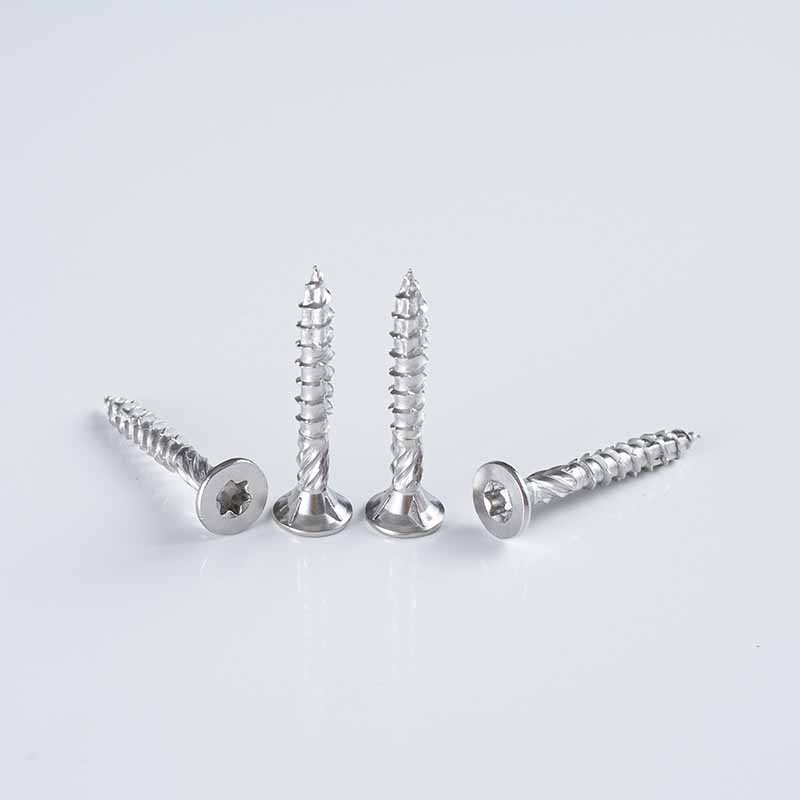
Long ranges such as the 14-10 x 50-150 CL3 T17 hex socket bugle head screw cover everything from deck board to timber frame, so one family of part numbers can replace several loose sizes in a site box.
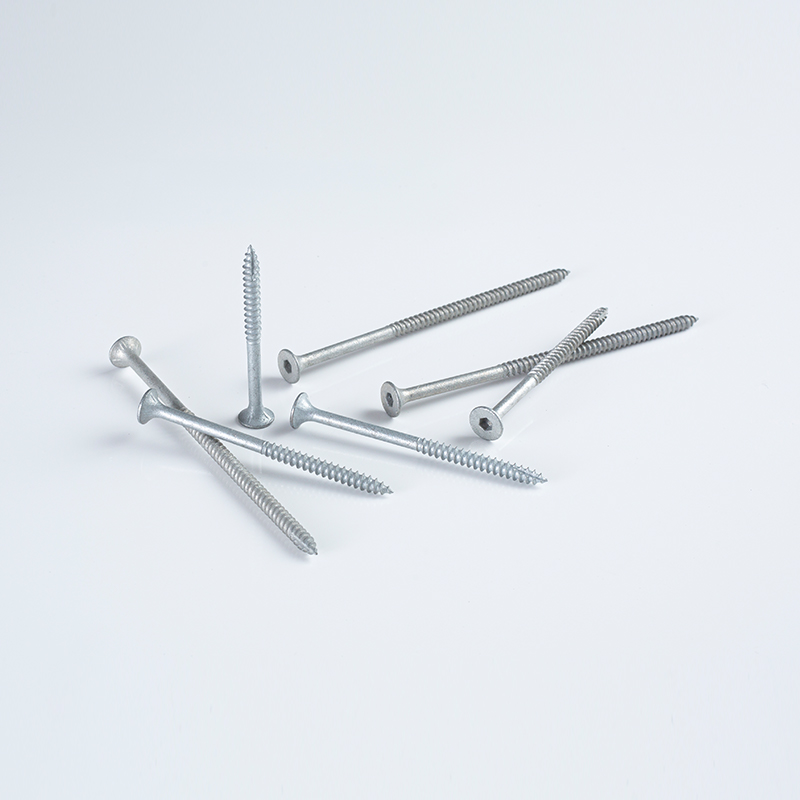 T17 Hex Socket Bugle Head Screw 14-10x50-150 CL3Bugle head wood screw with T17 point, hex socket drive and CL3 coating; the 50-150 mm range suits deck board to timber frame work.View Product →
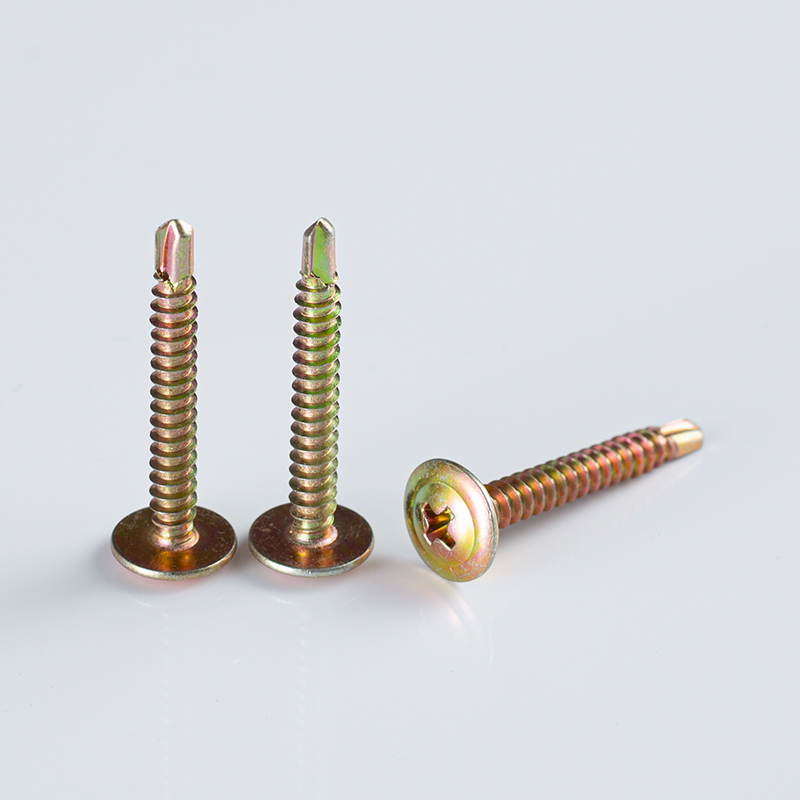
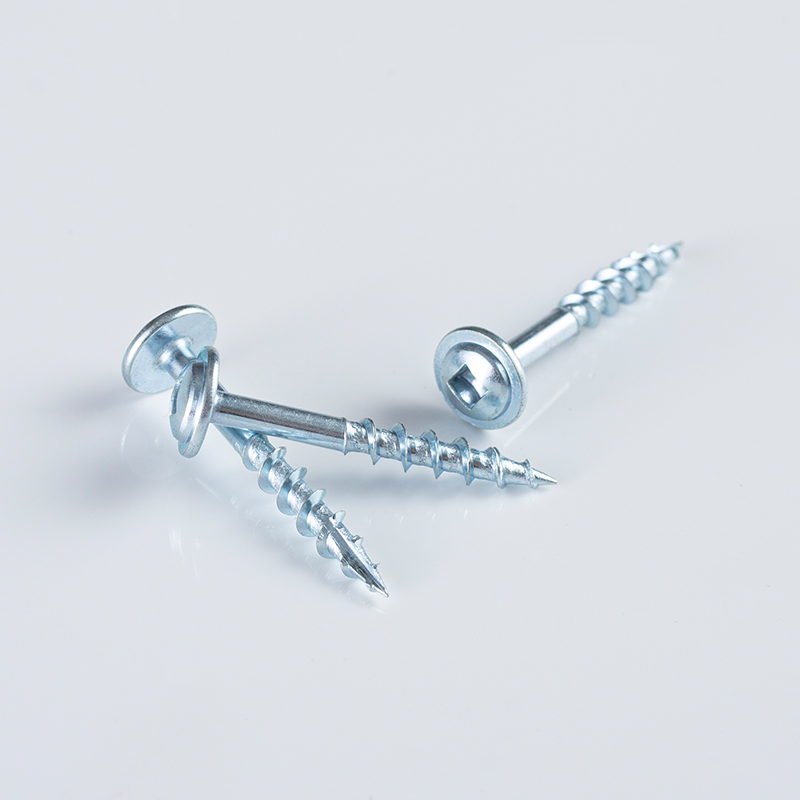
Countersunk and bugle head wood screws are measured overall, with the head included. Pan, button, hex, and wafer head screws are measured from under the head, so the head height sits on top of the quoted figure. The difference is roughly 2 mm on a #8 countersunk head and closer to 5 mm on a #14 hex head, but it decides whether a point breaks through the far face of a panel or stops short of solid timber.
Length without diameter is half a specification. A larger diameter raises withdrawal capacity but also raises splitting risk, and the usual shop rule is to keep the shank below roughly one quarter of the thickness of the thinner piece. On a 19 mm (3/4 in) cabinet panel that puts #8 (4.2 mm) comfortably inside the limit and #10 (4.8 mm) right at the edge, where a pilot hole becomes mandatory in hardwood or particleboard.
Long screws also need more diameter. A 150 mm screw with a 4 mm shank twists off in dense timber where the same length in a 6 mm shank drives cleanly, so going up in length for structural work normally means going up in gauge as well. For panel assembly the increments that matter are small ones, 30 mm, 35 mm, and 40 mm, rather than 25, 50, and 75.
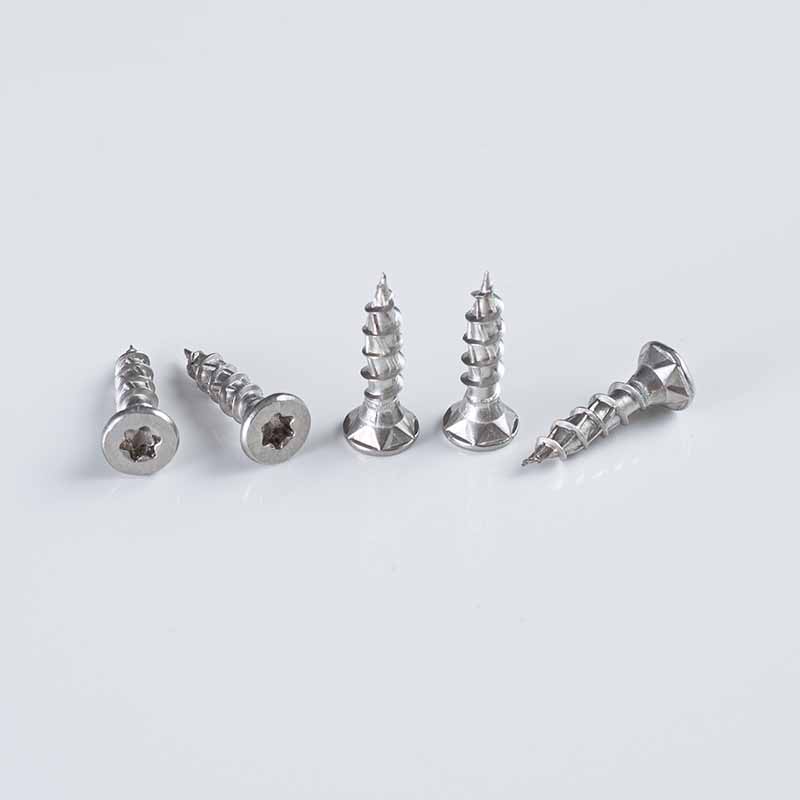
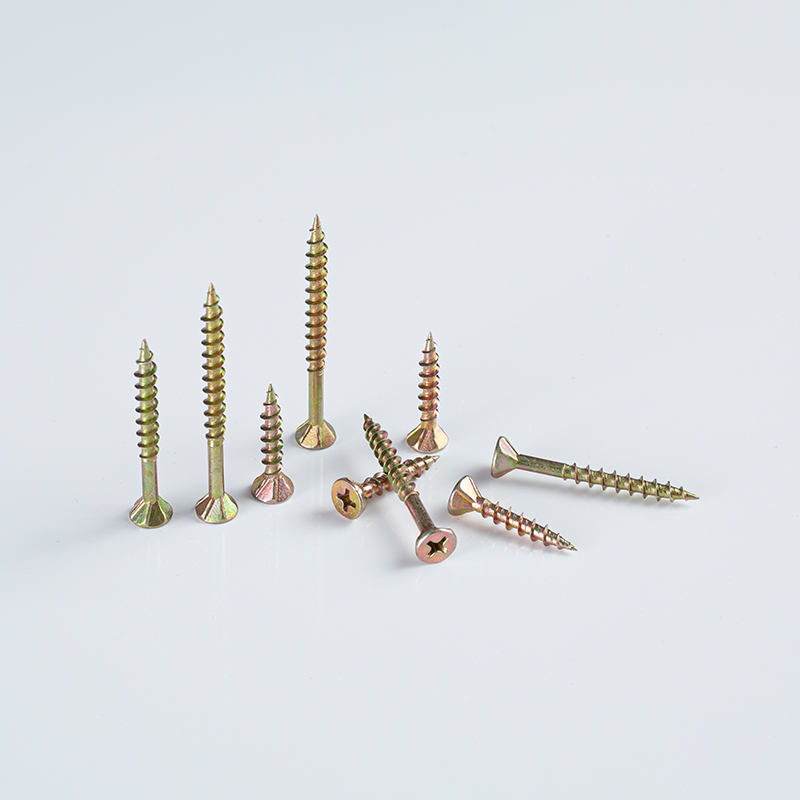 Cross Recess with 4 Ribs Fiberboard Screw 8-10x25-57 Z/Ymalingfei@linghongscrew.comView Product →
Stainless grades A2 (304), A4 (316), and 410, plus coatings such as yellow zinc, Ruspert at 500 h or 1000 h of salt spray, and Dacromet at 1000 h, all change how long a fastener survives rather than how long it is. The one geometric consequence worth remembering is that stainless is softer than carbon steel, so on a coastal project you often recover equal load by moving up a diameter while keeping embedment the same.
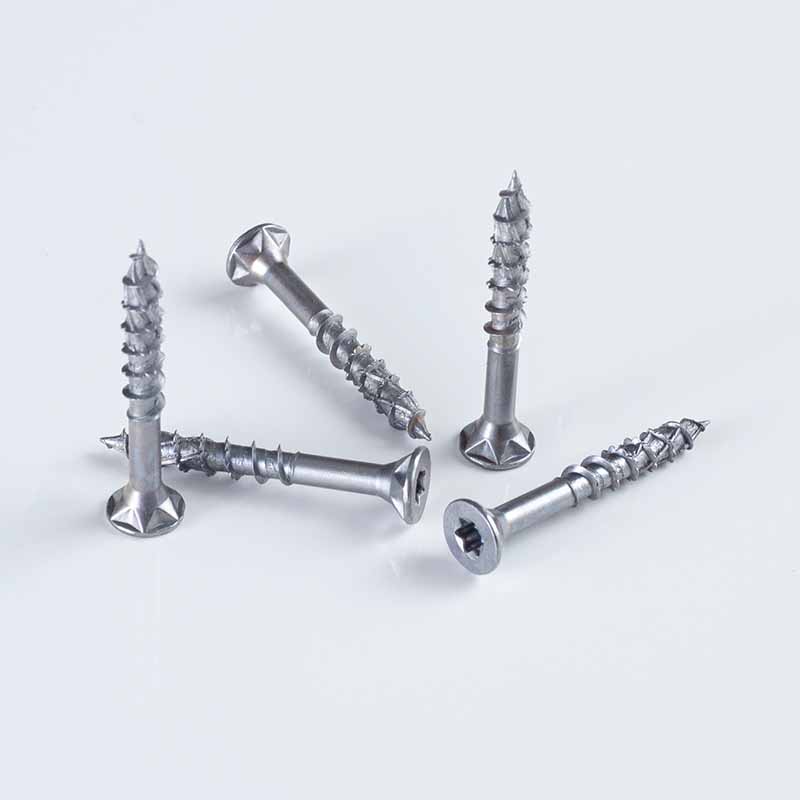
Preservative-treated timber, especially the copper-based treatments used for decking and ground contact, attacks plain zinc quickly. Hot-dip galvanized or stainless fasteners handle it, and a bugle head Type 17 screw in A2 stainless at 14-10 x 65-150 covers most deck and cladding boards without a pilot hole in softwood.
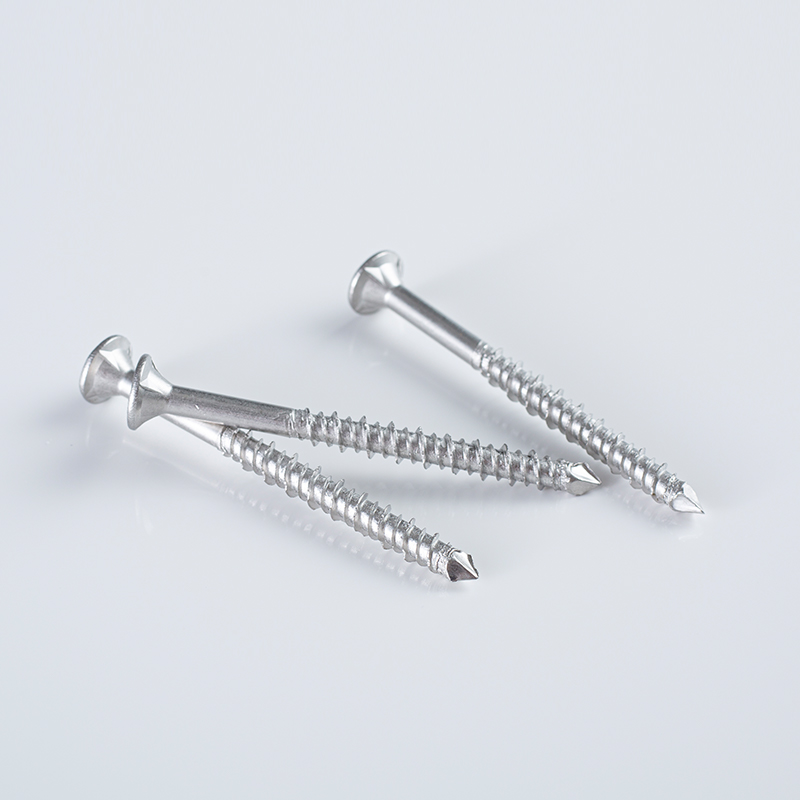 14-10x65-150mm T40 SS304 A2 Torx Bugle Head Type 17 ScrewA2 stainless steel bugle head screw with T40 Torx drive and Type 17 point, sized 65-150 mm for treated decking and cladding boards.View Product →
Once the size is fixed, write it down the way a supplier reads it, because a verbal "about two inch" costs more in returns than any price difference between two manufacturers.
Buyers who work through repetitive panel assemblies can often fix one length for a whole product family, which keeps reorder codes stable. Our application notes on furniture assembly show how those families are usually grouped.
Both members are 38 mm thick, so half of the receiving member is 19 mm and the minimum total is about 2-1/2 in (63 mm). For structural connections use 3 in (76 mm) so the thread reaches 1-1/2 in into the base member.
No. Extra length only adds capacity when it adds engaged thread in the base member. Past that point it raises splitting risk, demands more torque, and pushes the point into voids or knots.
It depends on the head. Countersunk and bugle heads are measured overall, head included; pan, button, hex, and wafer heads are measured under the head. Check the convention before comparing two similar sizes. More of these sizing questions are answered in our FAQ section.
Choose the length from the joint, not from habit. Measure both members, add the countersink, cover half the receiving piece as a floor and the full thickness as a target, then confirm the measurement convention that matches the head style. That is the whole method, and it holds whether the screw is a 30 mm fibreboard fastener for a cabinet or a 150 mm structural screw under a deck board.

+86 15856352820

malingfei@linghongscrew.com

No. 56, Baishizhan Road, Economic Development Zone, Langxi County, Xuancheng City, Anhui Province, China

