


 English
 Español
 Deutsch
 عربى

Home / News / Industry News / Drywall Screw Types and Applications: Head, Thread, Point and Coating Guide
Industry News
Content
A finishing crew can lose a day to one wrong carton of screws. On a steel stud partition, the board was 1/2 in. gypsum, the framing was 0.6 mm light gauge, and the pallet carried coarse thread screws ordered for an earlier timber project. Every third screw spun instead of cutting a thread, the heads sat proud of the board, and the next morning went into resetting them by hand.
The screws were not defective. They were specified for the wrong substrate. Four variables decide whether a drywall screw holds: head shape, thread pitch, point geometry and coating. Length and diameter then follow the board thickness and the framing behind it.
Match the screw to the substrate first, then to the exposure, and only then to price. A screw that strips a 0.6 mm stud costs far more in labour than the price gap between two pallets.
The six types below cover almost every partition, ceiling and sheathing package. Read the table by column: the substrate decides the thread, and the exposure decides the coating.
| Type | Thread and point | Best substrate | Coating and notes |
|---|---|---|---|
| Fine thread (Type S) | Fine thread, sharp point | Steel studs 0.6 to 1.0 mm | Black or grey phosphate; strips thin steel if over driven |
| Coarse thread (Type W) | Coarse thread, sharp point | Wood studs, OSB, timber | Yellow zinc or black phosphate; tears paper if over driven |
| Self drilling | Fine thread, drill point | Steel 1.2 mm and thicker | Yellow zinc, zinc nickel; needs higher drive torque |
| Collated | Fine or coarse, sharp or drill point | Volume board and sheathing work | Black phosphate or yellow zinc; needs a matching auto feed nose |
| Stainless | Coarse or fine, sharp point | Wet rooms, exterior sheathing | 410, 304 (A2) or 316 (A4); no coating to chip |
| Hi low thread | Double thread, sharp point | Gypsum to gypsum, plastics | Blue white zinc or waxed; lower pull out in structural wood |
ASTM C1002 sorts drywall screws into Type G for gypsum to gypsum, Type S for steel studs and Type W for wood framing. In everyday ordering, the split that matters is thread pitch.
The failure modes are predictable. A coarse thread screw driven into light gauge steel reams the hole instead of forming a thread, so the stud loses section and the screw never tightens. A fine thread screw in softwood cuts a shallow path, pull out values drop, and a loaded ceiling can pull the board off the frame.
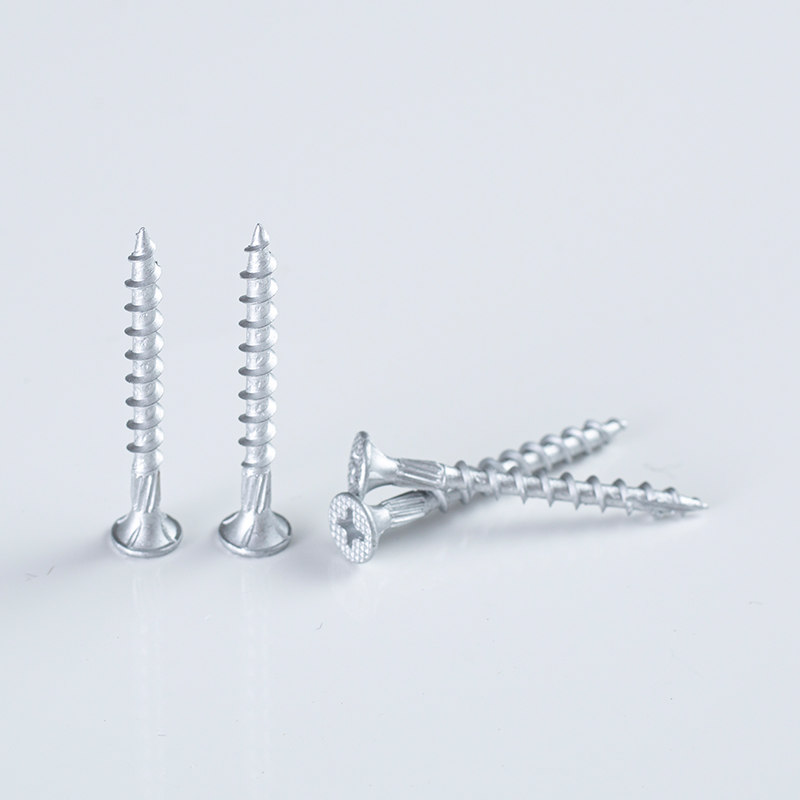
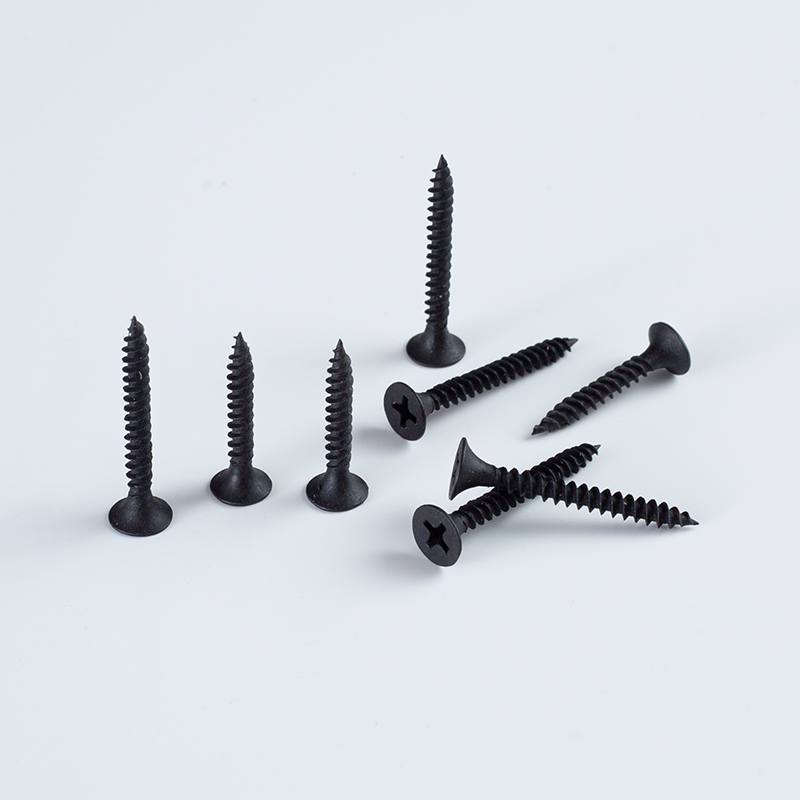 6-18×25 Black Phosphate Phillips Bugle Head Drywall ScrewsThis 3.5 mm fine-thread screw suits 12.5 mm gypsum board on wood or light-gauge steel studs. Its bugle head and sharp point reduce stripping, making it practical for dry indoor ceiling and partition work.View Product →
Catalogue codes carry this information without words. A 6 x 25 mm line gives diameter and length, with 6g x 1 in. as the imperial equivalent for ANSI markets. Steel under 0.5 mm usually takes a 3.5 x 25 mm CR6 zinc screw, while heavier studs move up to a drill point. The drywall screw range separates carbon steel from the stainless and stainless iron families first, because material drives every decision after that.
The bugle head exists for one reason: it compresses the paper face of gypsum board without cutting it, and that paper carries most of the pull through resistance. Any other head used on board crushes the gypsum core, and the compound that fills the crater shrinks back later as a line of visible rings.
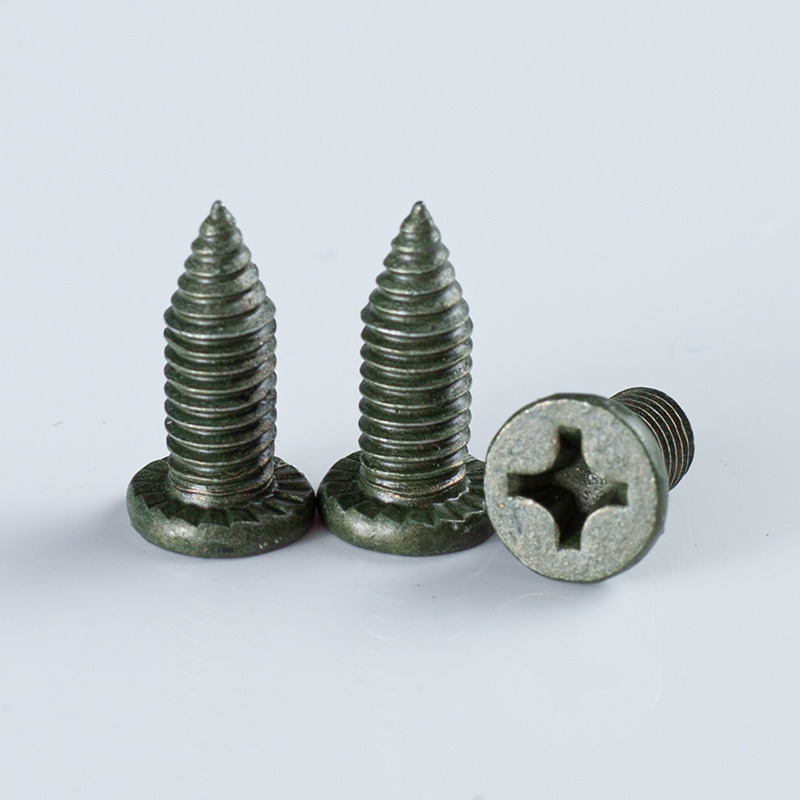
Ribs formed under the head act as a countersink and cut spin out in dense timber and board, which is why 4 rib and 8 rib versions are specified next to plain bugle heads.
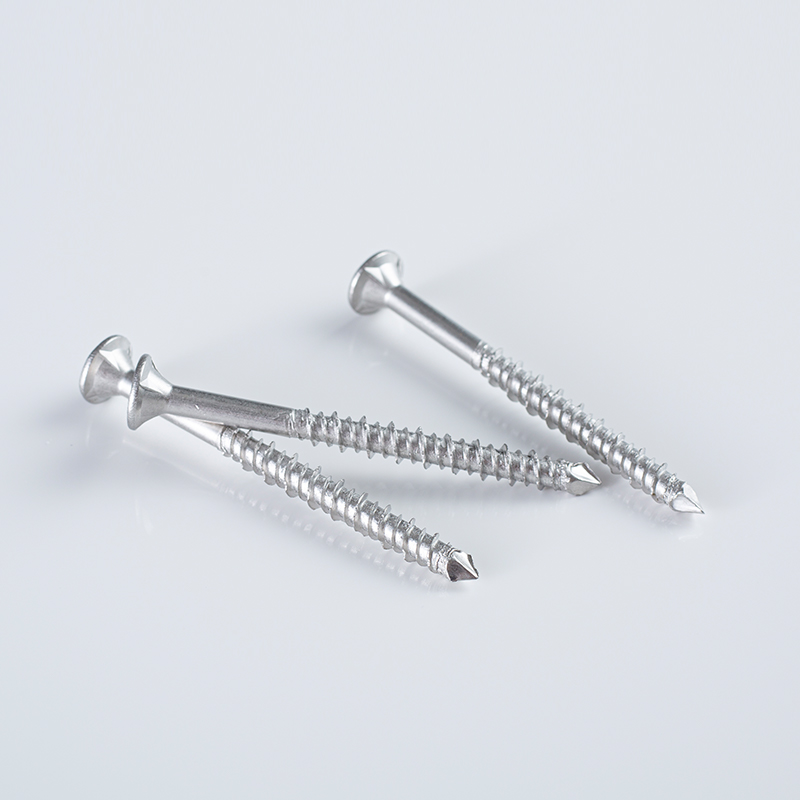
Point geometry decides whether a screw enters the steel or stalls on it. A sharp point with fine thread pierces 0.6 mm to 0.8 mm studs. Above roughly 1.2 mm, the screw needs a drill point that cuts its own pilot hole for the thread to follow.
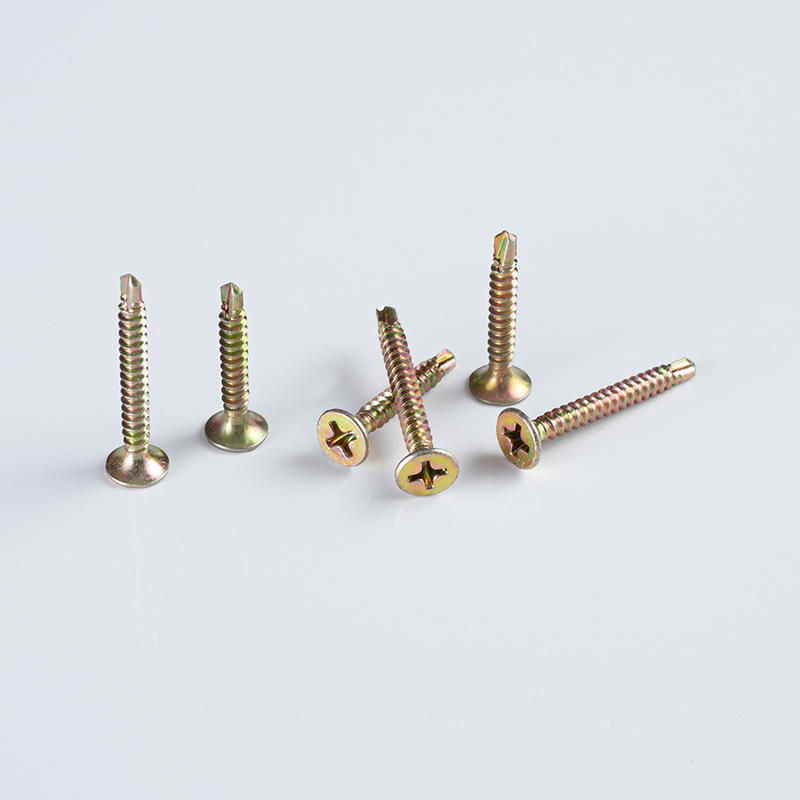 6-18×25-45 Yellow Zinc Plated Phillips Bugle Head Self-Drilling Drywall ScrewsWith an integrated drill point for steel up to 1.8 mm, these 25-45 mm screws mount gypsum, cement board, or OSB to light-gauge framing in one step. Yellow zinc adds mild corrosion resistance for damp indoor areas.View Product →
Drive torque belongs in the specification on thin steel. A high speed impact driver running wide open can over run a fine thread screw before the clutch reacts, which is how paper tears even when the correct screw is in the box.
Coating is the variable most often reduced to a colour, and it is the one that decides how a ceiling ages in a bathroom or a coastal building.
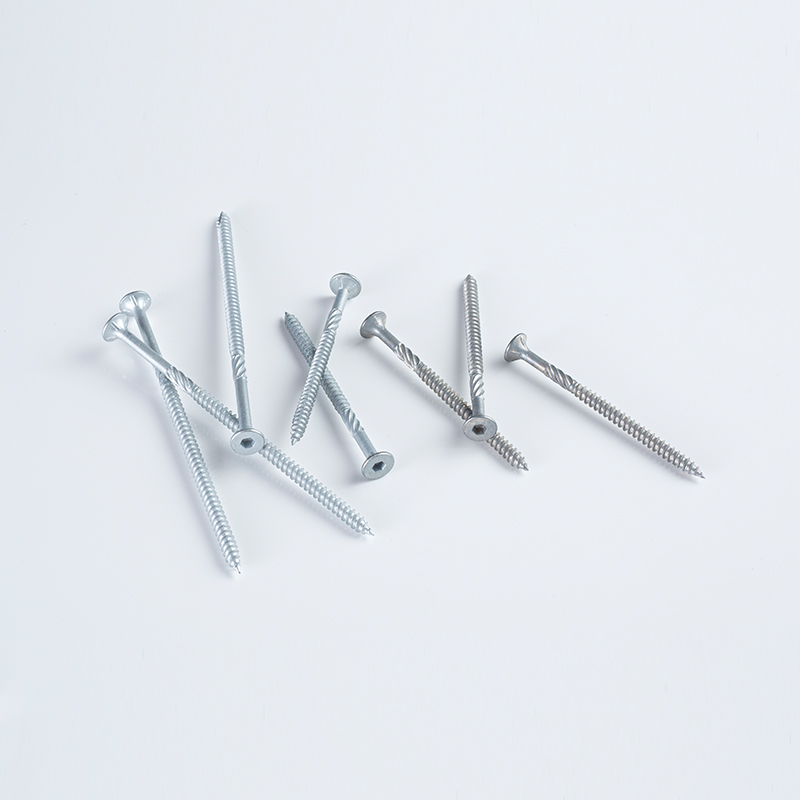
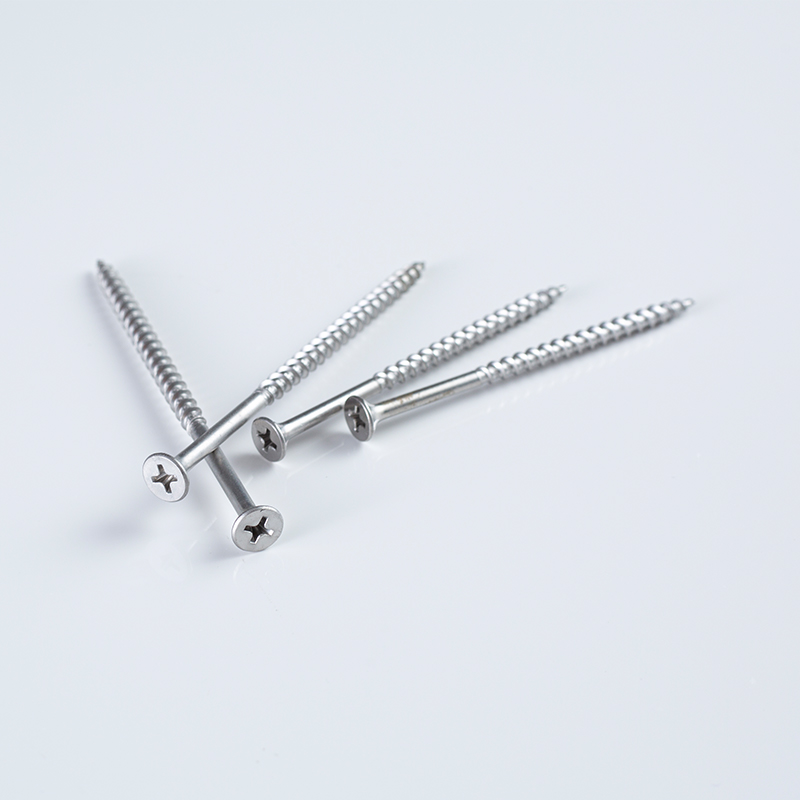 4.8×90-120mm High-Tail 410 Stainless Steel Phillips Bugle Head Coarse Thread ScrewMade from martensitic 410 stainless steel, this heavy-duty 4.8 mm screw reaches 90-120 mm for thick boards and deep framing. The coarse thread and high-tail design aid chip clearing, while the material suits damp or outdoor settings.View Product →
A corrosion claim without a test report is a colour sample. Ask for the salt spray hours, the standard and the coating weight before approving a substitution, because a screw that rusts behind a tiled wall cannot be replaced without demolition.
Length is arithmetic: start with the board thickness, then add the minimum penetration into the framing.
Spacing follows the framing: 12 in. on centre in the field and 8 in. on centre at board edges and ceilings is the usual specification, tightened to 8 in. and 6 in. for fire rated and ceiling assemblies. Diameter is normally 6 gauge (3.5 mm), with 8 gauge (4.2 mm) for cement board and thick sheathing.
Set the head just below the surface with the paper intact. A head driven through the paper loses most of its capacity, and an impact driver at full speed gets there before the operator feels resistance.
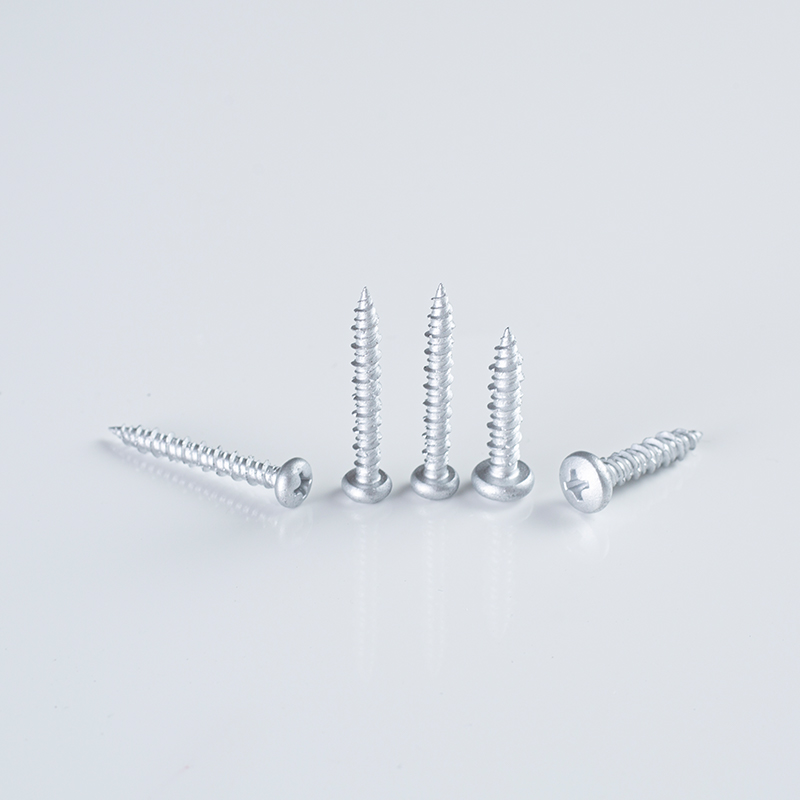
Fine threadCoarse threadSelf drillingCollatedStainless 410
The construction and interior decoration applications page groups products by these jobs, which shortens the search when one project mixes steel studs, cement board and an exterior soffit.
A purchase order line should be readable by the factory, the quality inspector and the foreman without a phone call. Six items cover it.
Three problems account for most drywall screw claims: coatings mixed inside one carton, thread pitch that does not match the framing on site, and corrosion claims copied between products without a matching report. A sample run on the actual stud gauge and board thickness settles all three before the full order is released.
Fine thread, or Type S, is made for steel studs and holds in 0.6 mm to 1.0 mm light gauge framing. Coarse thread, or Type W, is made for wood framing, where deeper threads grip softwood fibres. Fitting the wrong one is the most common cause of spinning screws.
Not in standard black phosphate finish. For bathrooms and laundries, specify 410 stainless or a coating rated at 500 salt spray hours. For exterior sheathing, soffits and coastal sites, use A2 or A4 stainless, or a 1000 hour coating such as Dacromet.
Add the board thickness to the minimum penetration: about 5/8 in. into wood framing and about 3/8 in. through steel studs. A 1/2 in. board on timber takes 1-1/4 in. screws, and the same board on 0.6 mm steel takes 1 in. fine thread screws.
Usually one of three causes: over driving with an impact tool, the wrong thread for the substrate, or a head shape that is not a bugle head. Check driver torque settings and confirm that fine and coarse thread stock has not been mixed on the same floor.
Head, thread, point and coating cover most of the risk in a drywall package; length and diameter follow the board and the framing, and the corrosion class follows the room. Get those four right and the crew stops resetting screws.
Anhui Linghong Hardware Technology produces drywall screws in carbon steel and in 304, 316 and 410 stainless from a 12,600 square metre workshop, with coatings that reach 500 and 1000 salt spray hours and collated versions for auto feed tools. Send the substrate, the exposure and the piece count, and the specification comes back as a line item that can be checked against the drawing.

+86 15856352820

malingfei@linghongscrew.com

No. 56, Baishizhan Road, Economic Development Zone, Langxi County, Xuancheng City, Anhui Province, China

