Collated Screws for Automated Fastening
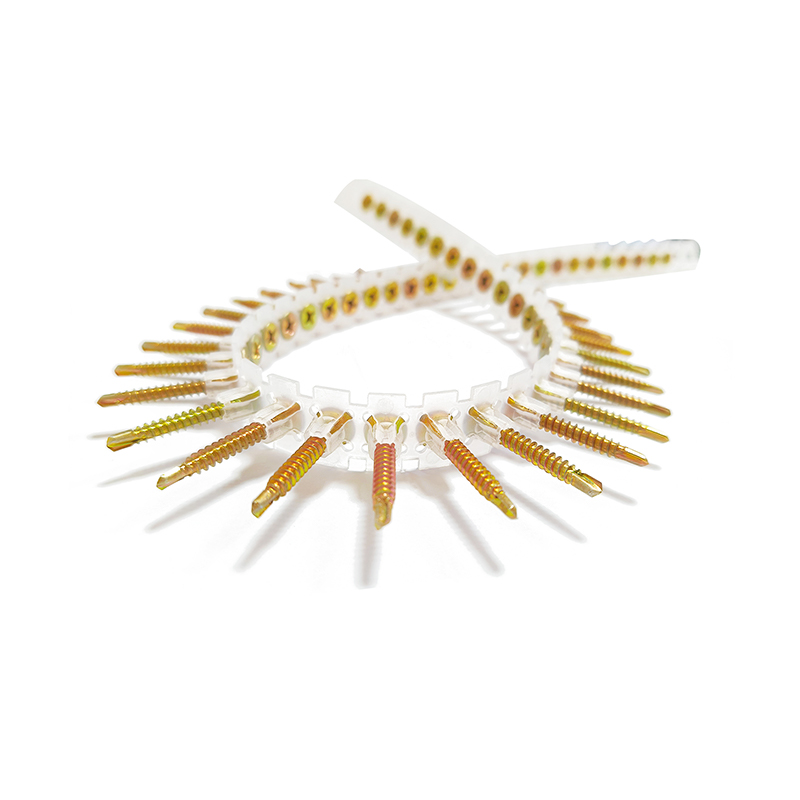
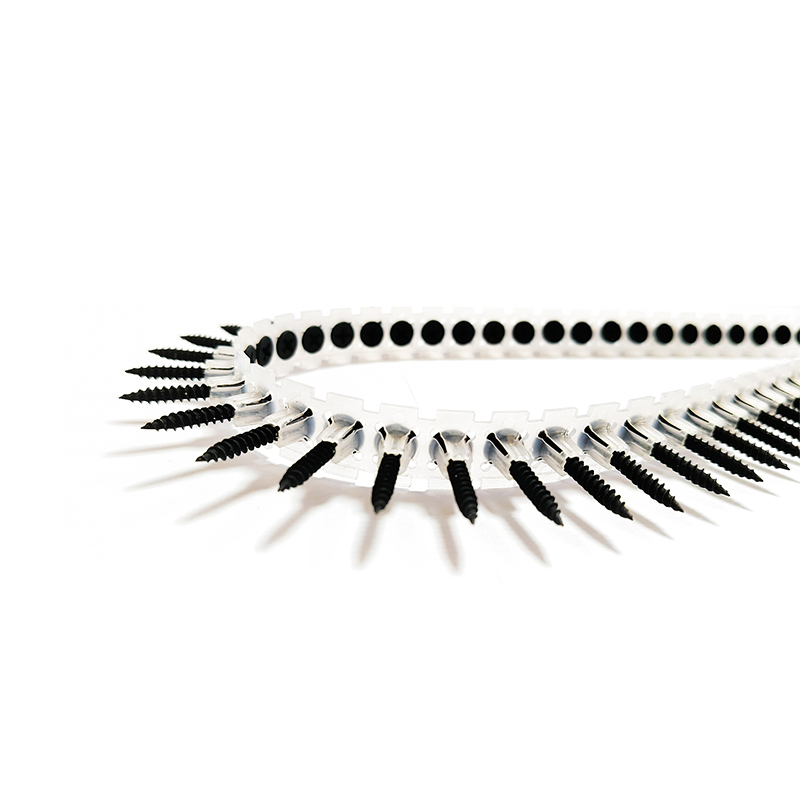
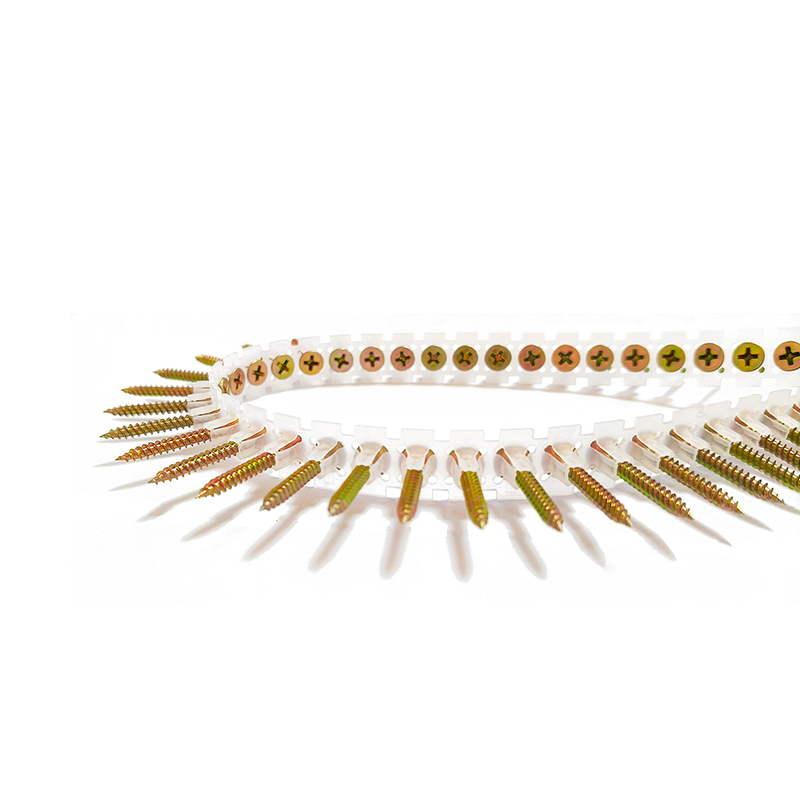
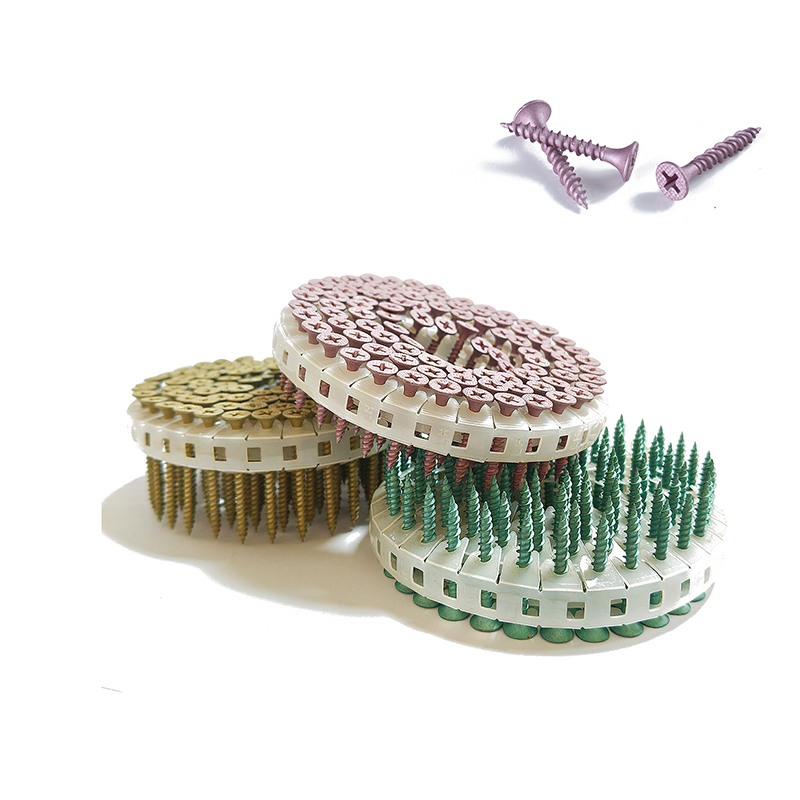
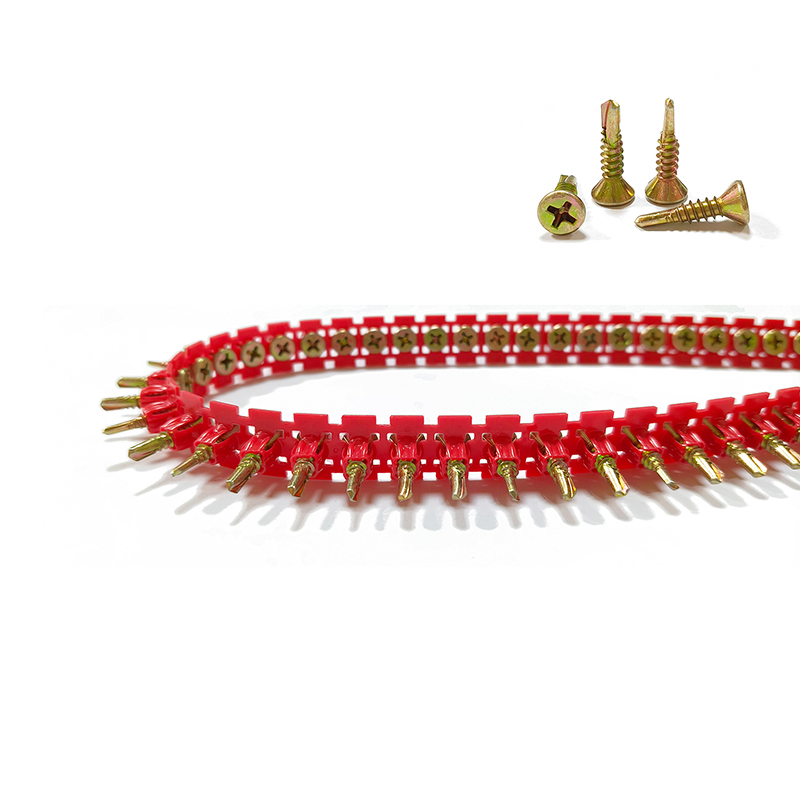
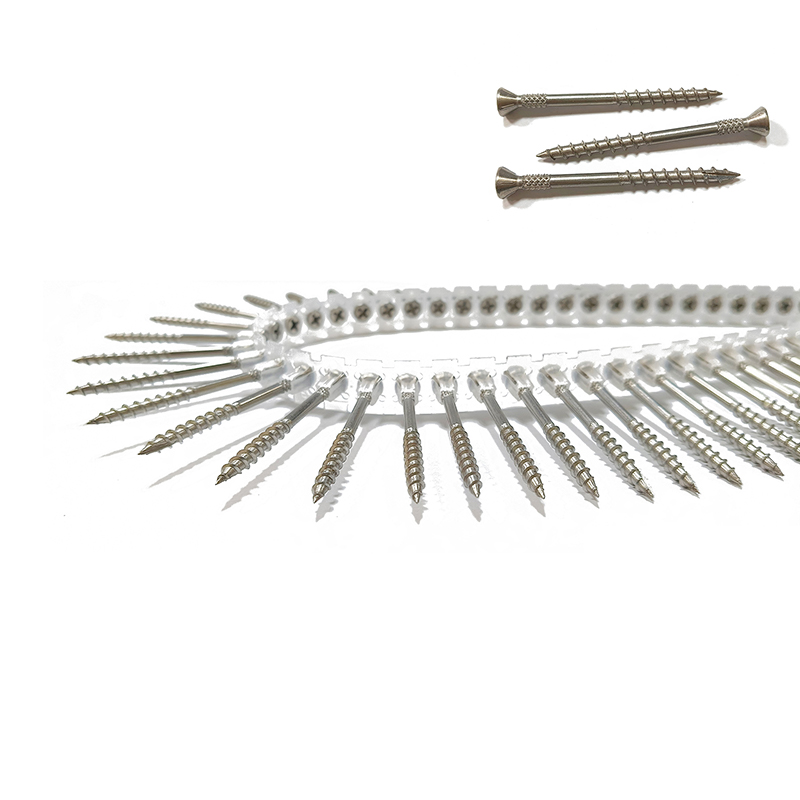
As a Collated Screws manufacturer and supplier, Anhui Linghong Hardware Technology Co., Ltd. produces strip-fed screws designed for high-speed automatic screw guns. Our collated screws eliminate manual handling, reduce installation time, and improve fastening consistency across drywall, wood framing, and light-gauge steel applications.
We supply two primary material families—carbon steel and stainless steel—each available in self-tapping and self-drilling configurations. With over 80 production machines and a monthly capacity of 500 tons, we support both standard catalog items and custom strip specifications for volume projects.
Our Collated Screw Range
| Product Type |
Material |
Typical Applications |
Key Features |
| Carbon Steel Collated Screws |
Low-carbon steel, case-hardened |
Drywall to wood studs, gypsum board, paneling |
Economical, high toughness, zinc or phosphate finishes |
| Stainless Steel Collated Screws |
Stainless steel (e.g., 410, 304) |
Humid or corrosive environments, exterior cladding, marine |
Corrosion resistance, high strength, no plating required |
Application Fit and Material Considerations
Collated screws are engineered for specific substrates. Our self-tapping wood-thread screws are ideal for fastening gypsum board to timber framing, while self-drilling types feature a drill point that pierces light-gauge steel without pre-drilling. The head style—countersunk, pan, or hex—affects the finished surface profile and drive compatibility.
For carbon steel, we offer blue-white zinc, colored zinc, or black phosphate finishes to balance corrosion protection and cost. Stainless steel grades provide inherent rust resistance, making them suitable for coastal or high-humidity projects. When selecting, consider the substrate hardness, required pull-out strength, and environmental exposure.
Critical Specifications and Performance
- Thread type: Self-tapping (wood) or self-drilling (steel) points.
- Head styles: Countersunk for flush finish, pan for general use, hex for higher torque.
- Drive systems: Phillips or Pozidriv recesses compatible with standard collated screw guns.
- Strip material: Paper or plastic collation, with uniform spacing to prevent jamming.
- Hardness: Case-hardened to resist shank breakage while maintaining thread sharpness.
Our quality control includes first-piece inspection, in-process checks, and final ex-factory testing using metallographic and Rockwell hardness equipment. This ensures consistent strip integrity and dimensional accuracy across each batch.
Configuration Options and Customization
We configure collated screws to match your tool and application. Options include screw diameter (e.g., #6, #8), length (from 20 mm to 45 mm or longer), head type, point style, and strip length (typically 25 or 40 screws per strip). Custom packaging—such as bulk boxes or retail-ready packs—is available to suit your distribution channel.
For high-volume projects, we can adjust strip tension and screw alignment to optimize feed reliability in your specific screw gun model. Our engineering team reviews your sample or drawing to confirm compatibility before production.
Automation Integration and Installation
Collated screws are designed for use with automatic feed screw guns, which drive screws at rates 8–10 times faster than manual methods. Our strips are manufactured to strict tolerances to ensure smooth feeding, reducing downtime caused by misfeeds or strip breakage. We provide technical guidance on tool setup, including recommended torque and depth settings.
For installation, ensure the screw gun is compatible with the strip type (paper or plastic) and screw length. Our team can recommend the appropriate strip configuration based on your tooling and substrate.
Quality Assurance and Compliance
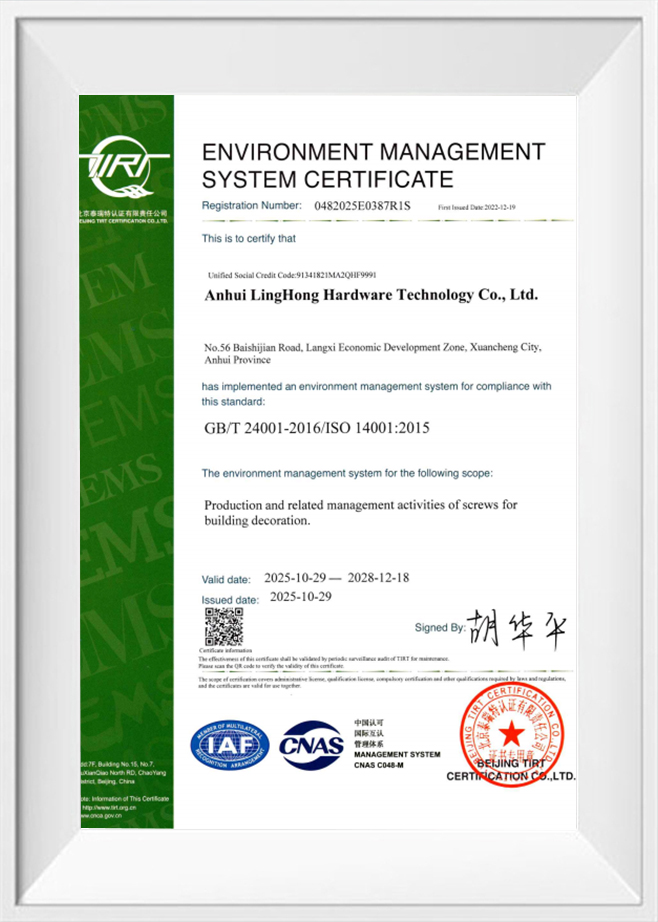
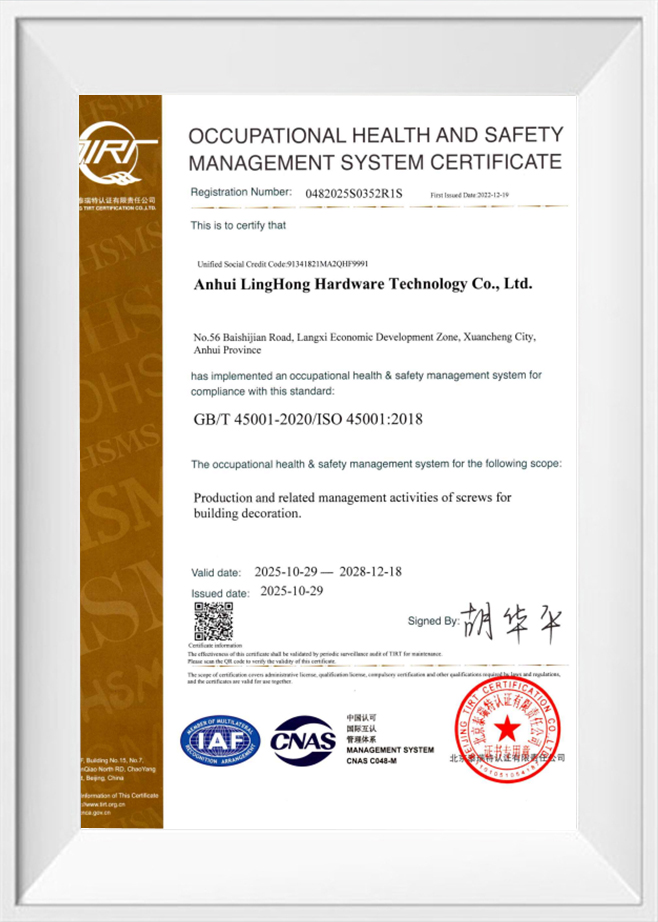
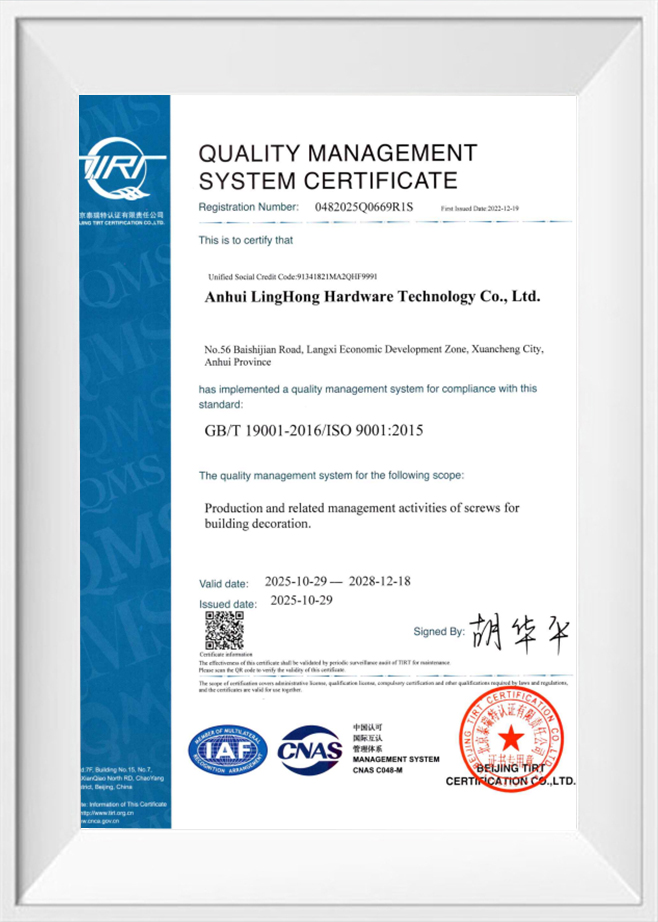
Our factory operates under ISO 9001, ISO 14001, and ISO 45001 certified management systems. We perform rigorous testing on raw materials and finished products, including hardness, thread profile, and coating thickness checks. Each batch is traceable from incoming wire to final packaging, ensuring consistent quality for export markets.
We also offer material certifications and test reports upon request, supporting your own quality assurance documentation.
Information We Use to Configure Your Solution
To prepare an accurate quotation and production plan, we need the following details:
- Substrate type (wood, drywall, steel gauge) and thickness
- Required screw dimensions: diameter, length, head style, drive type
- Material preference: carbon steel or stainless steel, and finish if applicable
- Target installation tool and strip type (paper or plastic)
- Annual or monthly volume and packaging requirements
- Any relevant standards or certifications needed
Submit these specifications through our contact form, and our sales engineers will respond within 12 working hours with a tailored proposal.
Frequently Asked Questions
What is the difference between carbon steel and stainless steel collated screws?
Carbon steel collated screws are heat-treated for strength and coated with zinc or phosphate for corrosion resistance, making them cost-effective for interior applications. Stainless steel screws offer superior corrosion resistance and are ideal for exterior or humid environments, though at a higher material cost.
Can you produce custom lengths or head styles?
Yes, we offer customization in diameter, length, head style, and point type. Provide your specifications or a sample, and we will confirm feasibility and lead time.
What is the typical lead time for bulk orders?
Lead time depends on order volume and customization level. For standard items, we typically ship within 2–4 weeks after order confirmation. Custom products may require additional time for tooling or testing.
Do you provide samples for testing?
Yes, we can send samples for your evaluation. Please contact us with your application details, and we will arrange sample shipment.
How do you ensure strip quality to prevent jamming?
We control strip tension and screw spacing during production, using precise collation equipment. Each batch is tested for feed consistency with standard screw guns to minimize jamming risks.



 English
 Español
 Deutsch
 عربى