


 English
 Español
 Deutsch
 عربى

Home / News / Industry News / How to Choose Collated Screws: A Practical Guide for Contractors and Buyers
Industry News
Content
Two crews on the same site order the same collated screw diameter and length, yet one strip feeds cleanly through an auto-feed screw gun all day while the other jams every ninth shot. The difference is rarely luck. Collated screws are selected on five variables: the substrate, the point geometry, the material and coating, the head and drive design, and the collation format itself. Get those five right, and fastener failures largely disappear from the job. This guide explains each variable in the order it should be decided, with the practical checks that matter on site.
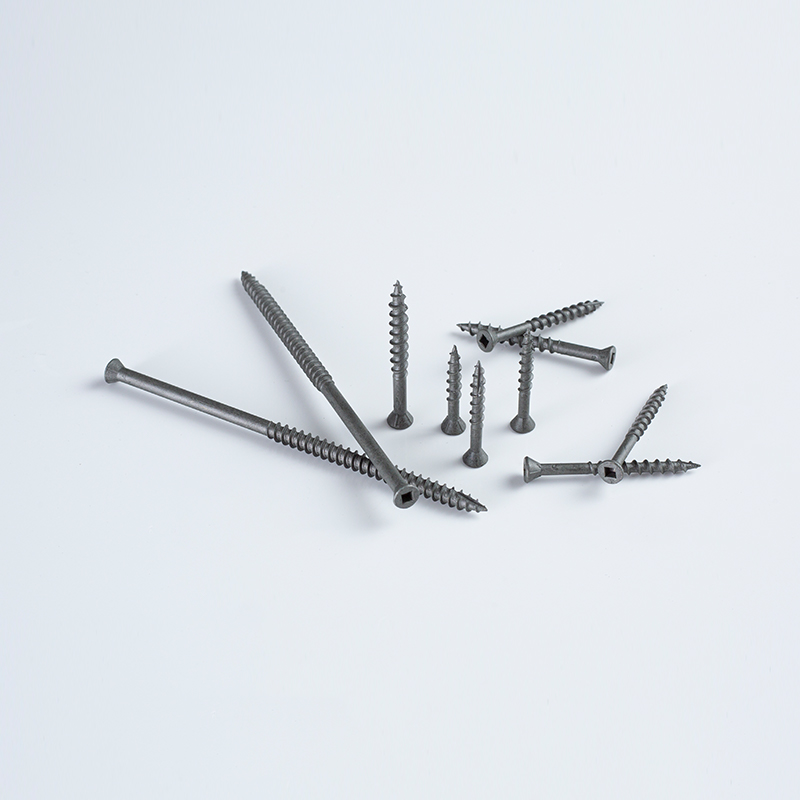
The substrate determines everything downstream. A collated screw threads into the material it was designed for; the same screw in the wrong base will strip out, split the board, or fail to seat. For timber studs, use a coarse-thread screw with a sharp or type-17 point. For gypsum board over timber, use a coarse-thread drywall screw. For gypsum board over light-gauge steel studs, switch to a fine-thread or self-drilling drywall screw. For metal-to-metal work, use a self-drilling screw rated for the sheet thickness.
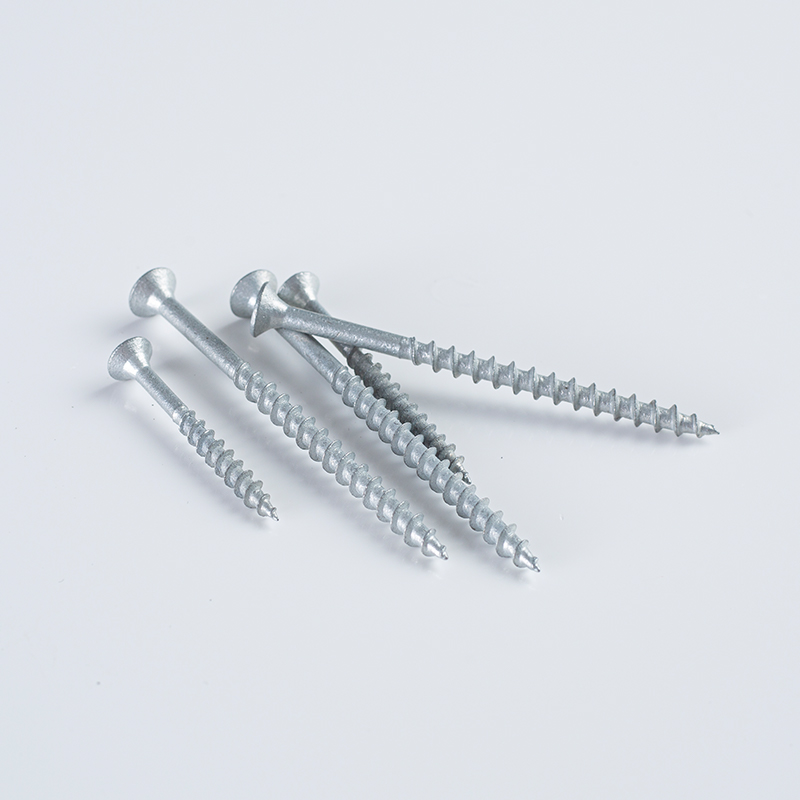
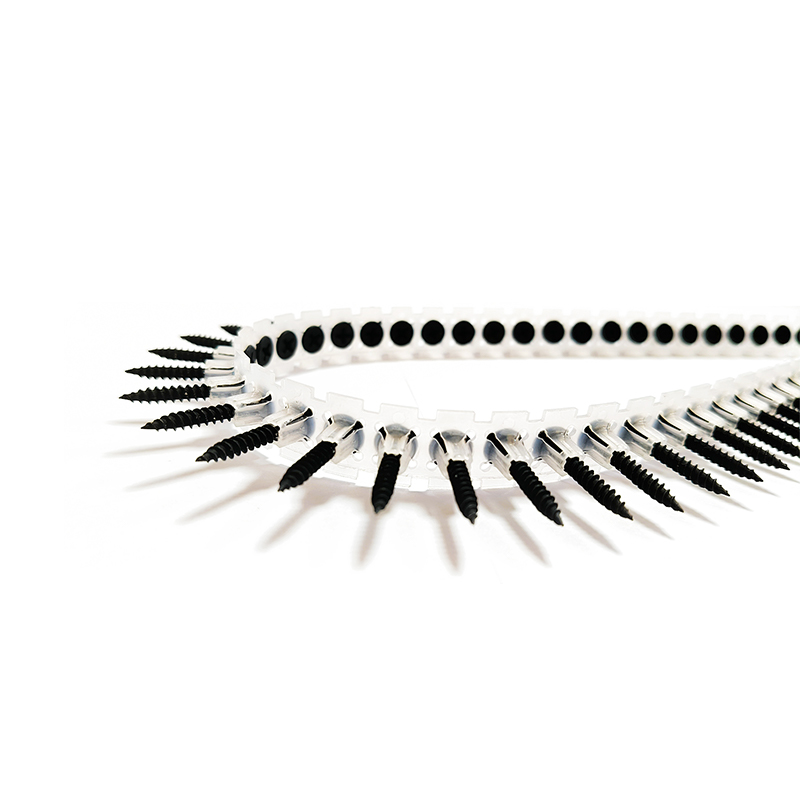 Collated Phillips Bugle-Head Drywall Screw for Steel FramingThis black phosphate drywall screw suits gypsum board over light-gauge steel studs, with fine-thread and coarse-thread options. Its bugle head seats flush and the collated strip boosts efficiency on large drywall jobs.View Product →
On most interior drywall jobs over steel framing, a 6-gauge, 25 mm collated bugle-head drywall screw in black phosphate is the standard starting point. It sinks flush without tearing the paper face and holds well in studs up to about 1.0 mm. The same screw family covers most construction and interior decoration fastening tasks once you adjust length and coating.
| Substrate | Screw family | Point / thread | Typical length |
|---|---|---|---|
| Timber and wood studs | Collated wood screw | Type-17 or sharp point, coarse thread | 25–75 mm |
| Gypsum board over timber | Collated drywall screw | Sharp point, coarse thread | 25–45 mm |
| Gypsum board over steel studs | Collated drywall screw | Sharp point, fine thread | 25–38 mm |
| Light-gauge steel (0.4–1.2 mm) | Collated self-drilling screw | Drill point, 8-rib or wafer head | 20–35 mm |
| Coastal and outdoor timber | Stainless steel collated screw | Coarse thread, ribbed head | 25–50 mm |
The point decides how the screw gets into the material. A sharp-point, self-tapping screw cuts its own thread in wood or gypsum, but in sheet steel it needs a pilot hole or very light material. A self-drilling point combines the drill with the thread: the milled tip cuts through steel, and the thread forms in the same pass.
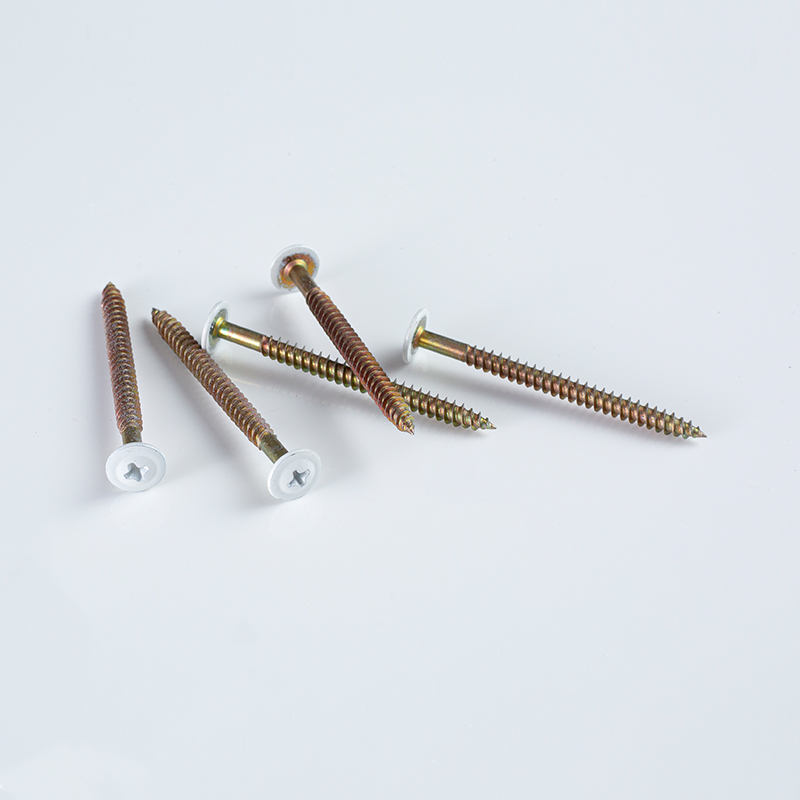
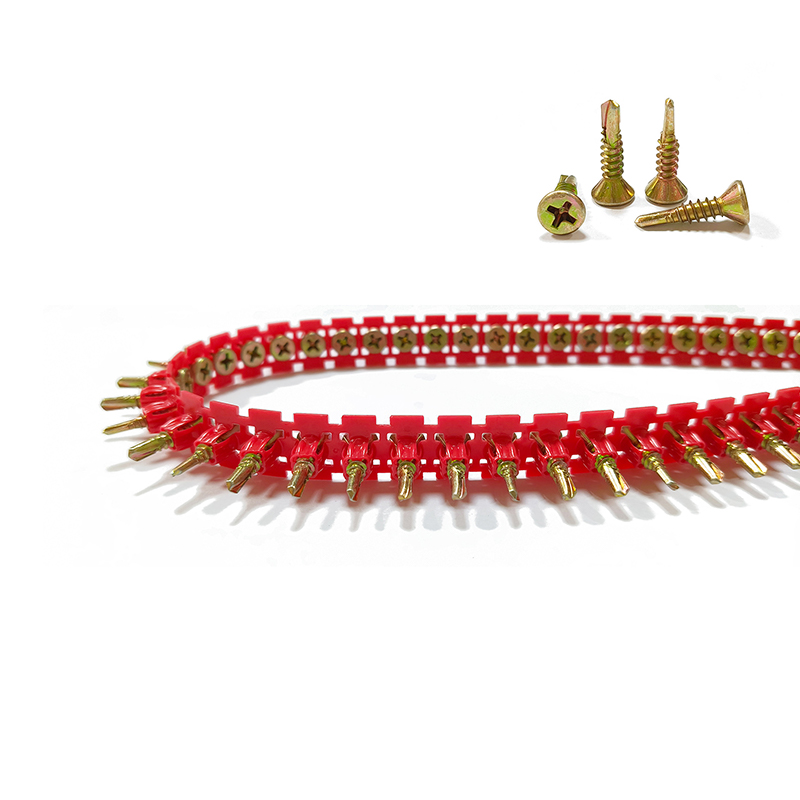 Collated Self-Drilling Countersunk Screw for Thin MetalThis yellow-zinc self-drilling screw features an 8-rib head and fine thread, drilling and tapping steel sheets in one pass. It suits light-gauge steel framing and color steel projects, reducing installation steps.View Product →
For steel studs and light-gauge framing, collated self-drilling screws remove an entire drilling step. An 8-rib countersunk self-drilling collated screw, such as this 8-gauge 20–35 mm yellow-zinc version, handles steel-to-steel fastening up to roughly 1.2 mm. Check the drill point against the combined thickness you are joining; a point that is too short will wander instead of drilling.
Collated screws work in different exposures, and the coating is the first line of defence. For dry interiors, carbon steel with blue-white zinc, yellow zinc, or black phosphate is sufficient and economical. For humid workshops, coastal air, or treated timber, upgrade to zinc-nickel, Ruspert, Dacromet, or stainless steel. Salt-spray hours are the most useful comparable number: 500 h suits sheltered outdoor use, while 1000 h coatings are specified for marine-adjacent structures.
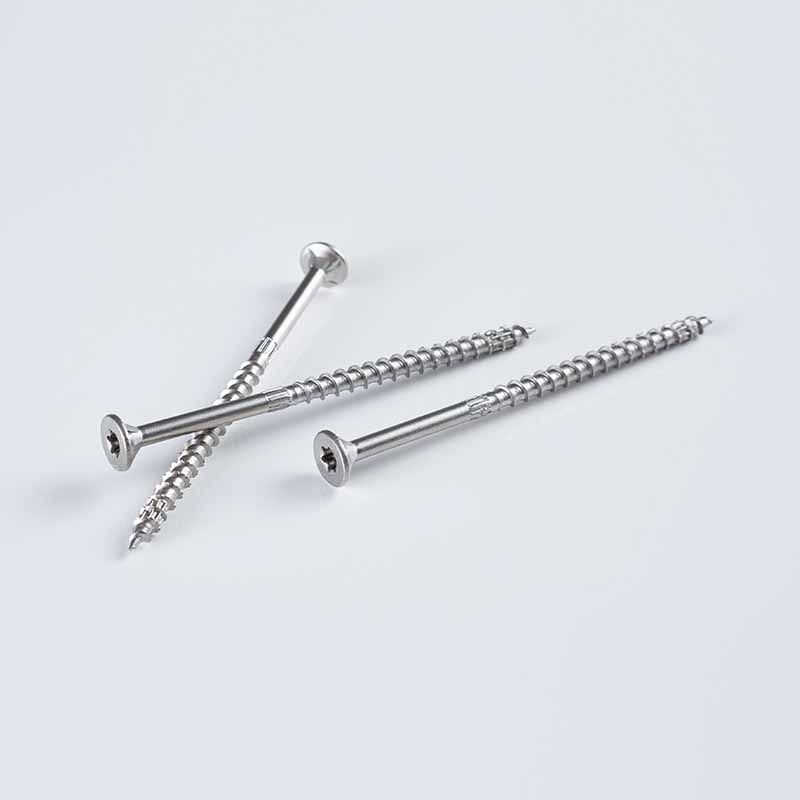
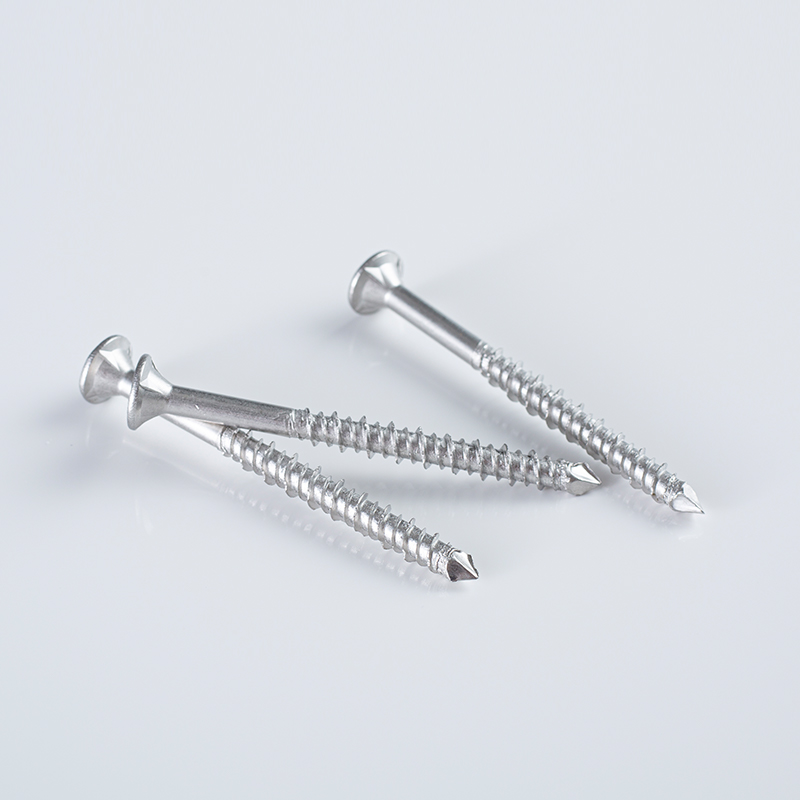
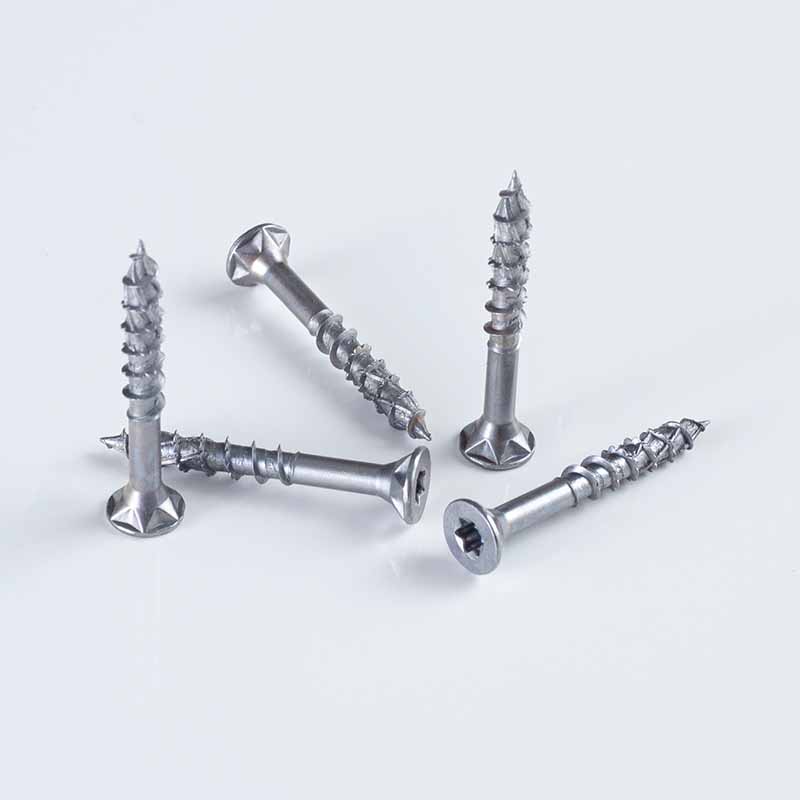
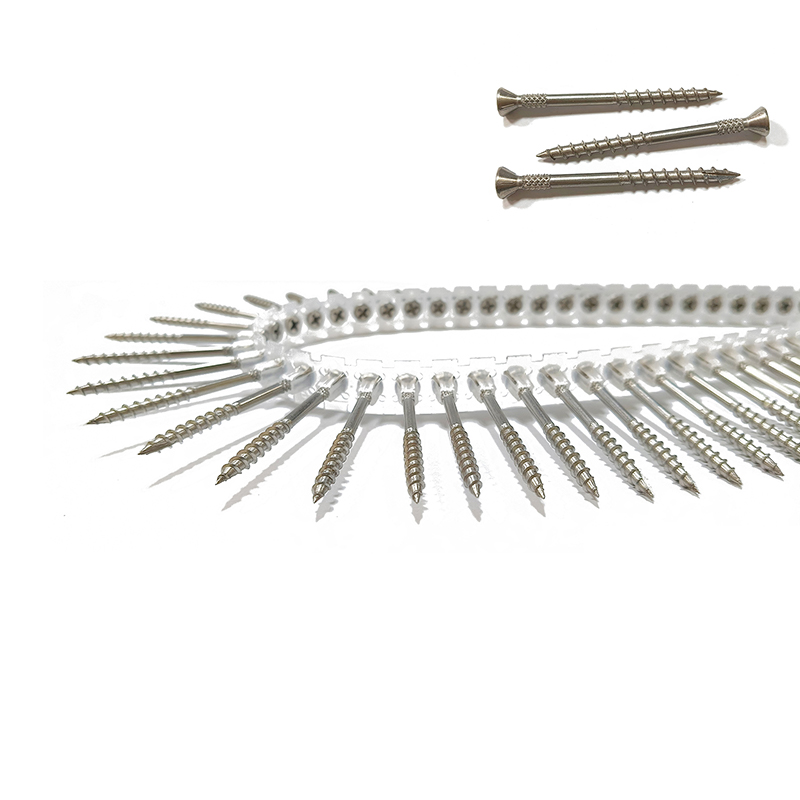 Stainless Steel Self-Tapping Screw with Embossed WasherThis A2 stainless steel screw has a countersunk head, four ribs, and an integrated embossed washer for anti-loosening and mild sealing. It self-taps into metal, wood, and plastic, suitable for outdoor and corrosion-prone uses.View Product →
Where corrosion risk is continuous, move to stainless steel. Type 304 (A2) covers most exterior timber and coastal conditions; type 316 (A4) adds molybdenum for chloride-heavy environments; type 410 provides higher hardness for wear-sensitive work. The marine and outdoor projects section shows how these grades combine with ribbed heads and embossed washers in collated strips.
| Finish | Indicative salt-spray resistance | Typical use |
|---|---|---|
| Black phosphate | 24–48 h | Drywall on steel studs, indoor |
| Blue-white zinc | 48–72 h | Indoor joinery, furniture |
| Yellow zinc | 72–120 h | General interior drywall and trim |
| Zinc-nickel | 480–720 h | Industrial and humid environments |
| Ruspert / Dacromet | 500–1000 h | Outdoor, marine-adjacent |
| Stainless 304 / 316 | Material-determined | Coastal, marine, treated timber |
The head shape controls how the screw seats against the surface. Bugle heads are the drywall standard because they create a smooth dimple without tearing the paper. Countersunk heads suit flush results in timber; wafer and pan heads spread load on thin panels and are common on self-drilling screws. The drive controls how much torque reaches the screw before the bit slips. Phillips recesses are standard but cam out under load; Torx designs such as T17, T20, T25, and T40 transfer torque more reliably and reduce bit wear on long runs.
Collated screws only save time if the strip matches the screw feeder. Strips are produced at different angles, typically 15°, 22°, 25°, and 34°, and an auto-feed screw gun is built around one collation angle. An incompatible strip will jam, curl, or break during feed, erasing every speed advantage. Check three numbers before ordering.
Buy from a manufacturer that produces coated and stainless collated screws under one roof, and ask for a sample strip to test in your own tool before committing to a full container. That small step prevents the most common collated-screw complaint: feeding failures that have nothing to do with the screw itself.
The cheapest strip per thousand becomes the most expensive job when failure is measured in rework. Hardness grades such as CL3 and CL4 indicate the surface hardness of case-hardened screws: CL4 is specified for harder, more abrasive substrates, while CL3 is common for general drywall work. In stainless collated screws, grade 410 delivers the hardness of martensitic steel while retaining practical corrosion resistance.
Visual checks matter. A consistent thread, clean coating without bare edges, sharp uniform ribs, and a firm connection between screw and strip are signs of controlled production. Ask for a salt-spray report, a material certificate, and a batch sample; routine documentation for any established fastener factory confirms that what you order is what ships.
Coarse-thread screws bite quickly into timber studs and gypsum board. Fine-thread screws have a smaller pitch that grips better in the thin wall of a steel stud. Matching the thread to the substrate is the most common correction on a collated screw order.
Yes, if the collation angle and strip profile match the tool. Stainless strips use the same angle system as carbon steel strips, but confirm the manufacturer's strip dimensions against your feeder before buying in volume.
They are hardness classes for case-hardened fasteners. CL4 indicates a higher surface hardness than CL3 and is recommended for harder or abrasive substrates. For most interior drywall work, CL3 is sufficient; for steel-to-steel or dense timber, CL4 is safer.
For two 12.7 mm gypsum layers, the screw must penetrate the stud by at least 10–12 mm after both layers. In practice, use 32–38 mm lengths for steel studs, with similar lengths for timber depending on the stud profile.
Choosing collated screws is a sequence of eliminations. Start with the substrate, then the point, material and coating, head and drive geometry, and finally the strip format. Confirm the hardness grade and inspect a sample before scaling the order.
When all six boxes are ticked, the collated screw stops being a consumable that fails and becomes a process that finishes the job on time.

+86 15856352820

malingfei@linghongscrew.com

No. 56, Baishizhan Road, Economic Development Zone, Langxi County, Xuancheng City, Anhui Province, China

