


 English
 Español
 Deutsch
 عربى
عربى
Home / News / Industry News / Stainless Steel vs. Stainless Iron Drywall Screws: What's the Difference?
Industry News
Content
A coastal renovation crew once substituted a box labeled "stainless iron" when the 304 stainless steel drywall screws ran out. Eighteen months later, the substituted fasteners showed an orange tide line through two coats of paint, while the original 304 screws on the same partition remained clean. The crew had assumed stainless iron was a short name for stainless steel. It is not.
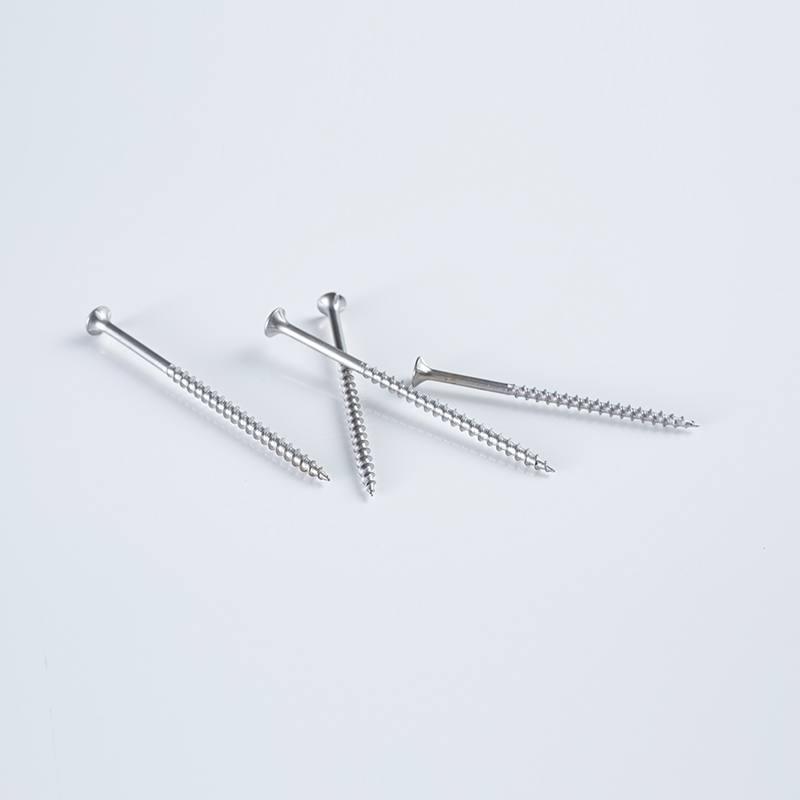
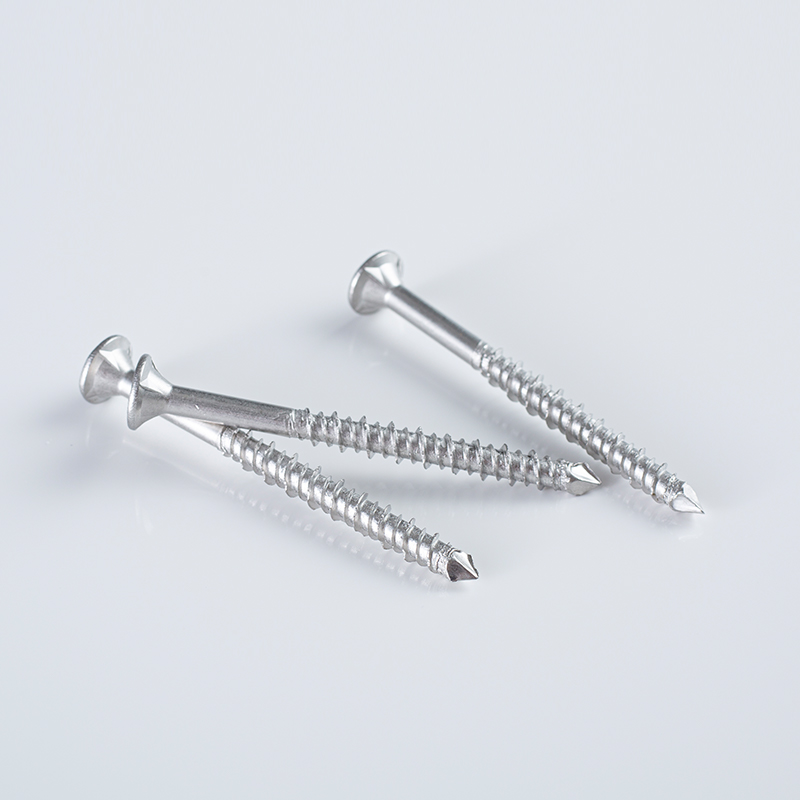
The practical definition is short: a stainless iron drywall screw is a hardenable martensitic stainless fastener, normally AISI 410, with 11.5 to 13.5 percent chromium and almost no nickel. A stainless steel drywall screw, in the context of corrosion-resistant specification, is an austenitic AISI 304 fastener with 18 to 20 percent chromium and 8 to 10.5 percent nickel. The two alloys behave completely differently when exposed to moisture, chloride, or salt-laden air.
The term stainless iron comes from the metallurgical split between ferritic and martensitic stainless grades, which contain little or no nickel, and austenitic stainless grades, which rely on nickel to stabilize their corrosion-resistant structure. In drywall screw catalogs, the phrase is almost always attached to 410-series martensitic stainless rather than a true 18-8 stainless grade.
Nickel is the deciding element. Without nickel, the alloy cannot form the fully austenitic face-centered cubic structure that gives 304 its wide corrosion tolerance. Stainless iron still forms a chromium oxide skin, which is why it looks bright in the box, but that skin breaks down faster when chlorides, condensation, or alkaline gypsum dust sit against the fastener.
| Variable | Carbon steel (phosphate plus wax) | Stainless iron (410 family) | Stainless steel (304 family) |
| Chromium content | None | 11.5-13.5% | 18.0-20.0% |
| Nickel content | None | 0.75% maximum | 8.0-10.5% |
| Magnetic behavior | Strongly magnetic | Strongly magnetic | Weakly magnetic after cold forming |
| Heat-treatable core | Possible | Yes, typical drywall screw practice | Not normally hardened |
| Relative material cost | Baseline | Approximately 1.3-1.5 times baseline | Approximately 1.8-2.4 times baseline |
The difference shows up fastest in a standard neutral salt-spray comparator. Plain carbon drywall screws begin to show red rust in the first 24 to 48 hours. Stainless iron 410 fasteners usually hold for roughly 100 to 200 hours. Genuine 304 stainless fasteners routinely hold beyond 600 hours. That ratio, not the absolute hours, is the reliable engineering message: stainless iron survives several times longer than carbon steel but still fails one-fifth to one-tenth as slowly as 304.
In real buildings, salt spray translates into a simple question: does water stay on the screw surface? Gypsum board is alkaline, and wet gypsum against a 410 screw creates the exact chloride and pH conditions that initiate pitting. Condensation inside a metal stud wall, steam from a pool deck, or humid marine air all accelerate the same failure.
Indicative comparative time to first red rust under neutral salt-spray exposure
Salt-spray values are a ranking benchmark, not a direct prediction of building service life.
The material rule for coastal and wet interiors: if the wall assembly can stay above 70 percent relative humidity for more than a few weeks per year, stainless iron is the wrong grade. Type 304 stainless steel is the minimum alloy for persistent condensation zones, pool buildings, coastal fenestration, and any area where the screw head will remain visible.
Stainless iron remains in the market for a legitimate mechanical reason: it can be quenched and tempered to a harder core than austenitic 304 stainless. A hardened 410 drywall screw drives more predictably into 16- to 20-gauge steel studs without thread stripping or head tearing at high tool speed. A 304 screw that has not been work-hardened sufficiently can be softer in the thread zone and more prone to galling when driven into steel.
For light gypsum attachment, this hardness advantage rarely matters because the gypsum board limits torque before the screw shank reaches its limit. But for double-layer board, dense board, or fastening into heavier steel track, contractors often notice the difference immediately. The correct response is not to abandon 304. It is to buy 304 fasteners from a supplier that controls cold-heading work hardening and applies a proper lubricating surface treatment.
Cost math that contradicts itself: switching an average 25,000-screw project from stainless iron to 304 adds roughly USD 100 to 300 at current metal prices. Removing one failed screw after drywall finishing, including spackling, touch-up paint, and a service call, frequently costs more than the entire material premium. Buyers who economize on the 100-dollar difference often pay the repair cost 20 times over within the first five years.
Choose by the environment first, then by driving behavior. Stainless iron solves the visible-surface corrosion problem in a dry lobby or office corridor at lower cost. Stainless steel solves the rust problem in assemblies that get wet, stay damp, or sit close to salt air. No coating on either alloy protects the thread after it cuts through the screw point, so the base alloy must carry the performance.
| Building condition | Typical moisture exposure | Recommended screw grade |
| Standard office or residential interior | Low, occasional condensation | Carbon steel phosphate, or 410 if rust staining is a concern |
| Indoor pool, spa, laundry, or shower-adjacent walls | High humidity plus chemical vapor | Type 304 stainless steel |
| Coastal building, parking structure, or exterior metal-stud soffit | Chloride-laden air and direct water | Type 304 stainless steel minimum |
A visual inspection rule also helps on site. Stainless iron drywall screws are strongly attracted to a magnet, just like carbon steel. Type 304 may show a light magnetic pull at the head or thread because cold heading distorts the crystal structure, but it should never cling as firmly as a 410 fastener. This test is screening, not proof; the only proof is a written mill certificate stating the alloy grade.
A supplier with production control, such as Anhui Linghong Hardware Technology Co., Ltd., can separate 410 stainless iron from 304 stainless steel because the wire stock, heat treatment, and forming tooling are different for each alloy. Ask for that production transparency before buying containers or pallets of drywall screws.
The acceptance standard: a drywall screw is a structural fastener only if the material certificate, head marking, and factory quality record all agree. If a quote says stainless steel at stainless-iron pricing, the first question should be which alloy the screw really contains.
Stainless iron is the trading name for martensitic 400-series stainless steel, most commonly AISI 410. It contains 11.5 to 13.5 percent chromium, very little nickel, and can be hardened to create a strong thread that drives well into steel studs.
No. Outdoors means rain, dew, and airborne chloride, all of which attack the thin passive film on 410 stainless. Type 304 or, in extreme coastal environments, type 316 stainless steel is the appropriate material for fasteners that must survive exterior exposure.
In a humid coastal setting, visible red rust can appear within one to two years. Under continuous condensation or direct water, the same screw can stain the surrounding wall in months. In a dry interior, 410 may remain clean for decades, which is why the grade still has a legitimate indoor market.
No. A strong magnetic attraction is a good warning sign that the fastener is 410 stainless iron or plain carbon steel. However, type 304 can become weakly magnetic at the cold-formed head and threads, so a final decision must be based on the material test certificate rather than a shop magnet.

+86 15856352820

malingfei@linghongscrew.com

No. 56, Baishizhan Road, Economic Development Zone, Langxi County, Xuancheng City, Anhui Province, China

