


 English
 Español
 Deutsch
 عربى

Home / News / Industry News / How to Choose Self Drilling Screws: Point, Thread, Head and Coating Guide
Industry News
Content
A 4.2 mm self-drilling screw that cuts a clean hole through a 2 mm steel bracket will spin in place on a 0.8 mm cladding panel, and the same screw that holds a dry indoor ceiling together can rust to the surface within a season on a coastal roof. Neither failure is a manufacturing defect. Both start with a screw that was never matched to the job it had to do.
The order of decisions that works is predictable. Match the drill point to the thickest material in the joint, match the thread and grip range to what the screw has to clamp, match the head and drive to the tool and the finished surface, then match the material and coating to the service environment. Get those four right, and the model number on the box follows naturally.
Non-negotiable: the point must be rated above the total thickness it has to drill, and the thread should engage at least three full threads in the base material. A stronger driver cannot fix either problem.
Self-drilling screws cut their own hole with a drill-shaped point and fluted tip, then form a matching thread in the same pass, which is why they are often called Tek screws on site. The point number describes the drill size, and each one has a working thickness range. Two rules cover most problems: count every layer the drill must pass through, and never exceed the rated capacity of the point.
A 3.2 mm stack under a 3.0 mm point stalls in the last fraction of a millimetre, and the tip burns rather than cuts. Stepping one point size up costs a little more per box and saves an hour of labor.
| Point | Drilling capacity (mild steel) | Best for | Watch out for |
|---|---|---|---|
| No. 1 | 0.8 - 1.6 mm | Thin cladding, trim, ducting | Dulls quickly under heavy pressure |
| No. 2 | 1.6 - 3.0 mm | Light steel framing, brackets | Needs steady pressure and speed control |
| No. 3 | 3.0 - 5.0 mm | Heavier brackets, vehicle panels | Strips if the clutch is set too high |
| No. 4 | 5.0 - 9.5 mm | Structural steel, machine frames | Long drilling time, heat build-up |
| No. 5 | 9.5 - 12.7 mm | Thick structural sections | Will not bite in thin sheet |
| Winged point | Timber into steel up to 12 mm | Wood-to-steel assemblies | Wings must snap off; needs a steel backing |
Winged points solve a specific problem: the wings ream a clearance hole through the timber so the screw pulls the wood tight to the steel, then break off the moment they touch metal. Light-section screws take the opposite approach, pairing a short drill point with a coarse thread for sheet between roughly 0.5 mm and 1.2 mm.
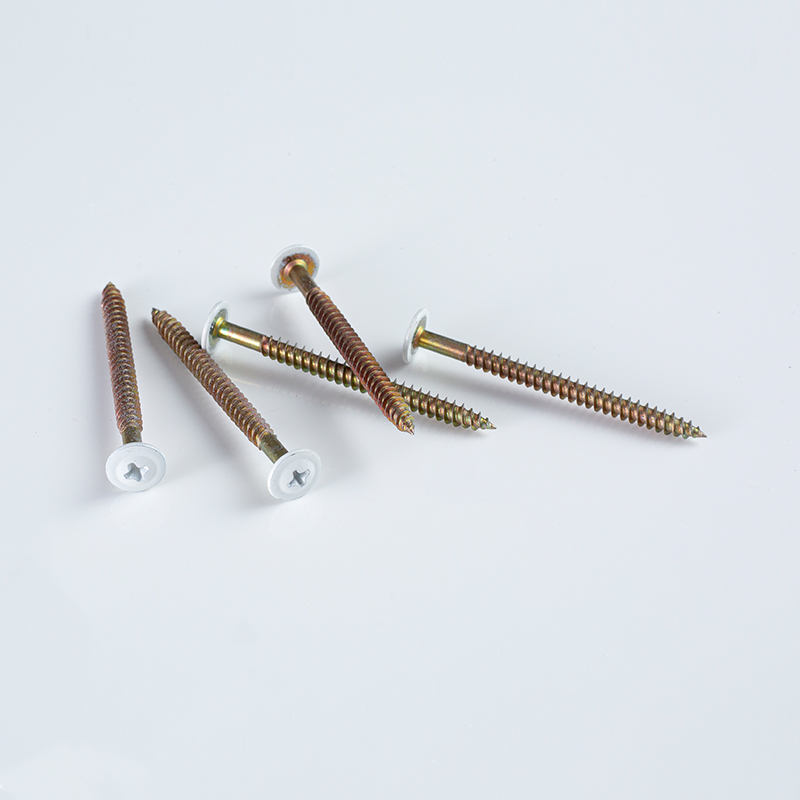
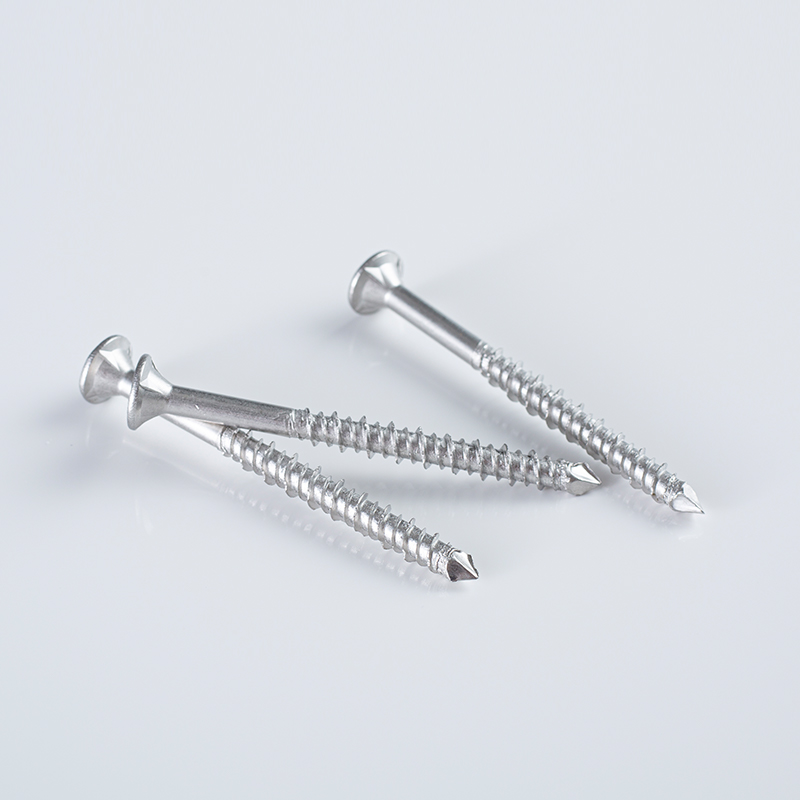
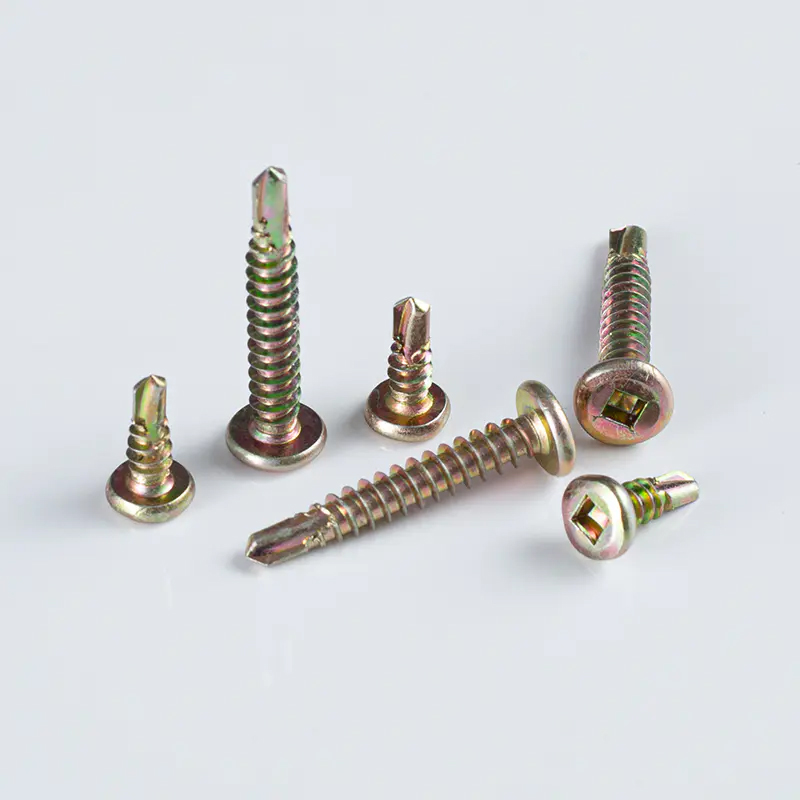 10-16x16-30 Zinc Yellow Square Drive Wafer Head Self-Drilling ScrewCarbon steel self-drilling screw with zinc yellow finish, square drive and wafer head, shown amid guidance on thread pitch and thin-sheet fastening.View Product →
Thread pitch sets how much material the screw grips per millimetre of thickness. Fine threads are the standard for sheet metal, because more threads stay engaged through thin steel; coarse threads suit timber, gypsum and plastic, where the material itself has to fill the space between threads.
A code such as 6-18 x 25-45 is shorthand for 6 gauge diameter, 18 threads per inch, and a grip range of 25 mm to 45 mm for the total thickness being clamped. If battens, panels and framing add up to 32 mm, a 25-45 screw closes the joint; a 16-30 screw bottoms out, leaves the head proud of the surface and strips the hole before the assembly is tight.
Strength class matters once torque rises. Heat-treated CL3 and CL4 versions resist torsional failure when a high-torque driver pulls thick sections together, while untreated screws belong on light sheet and low-torque tools.
The head decides where the load lands and how the finished surface reads.
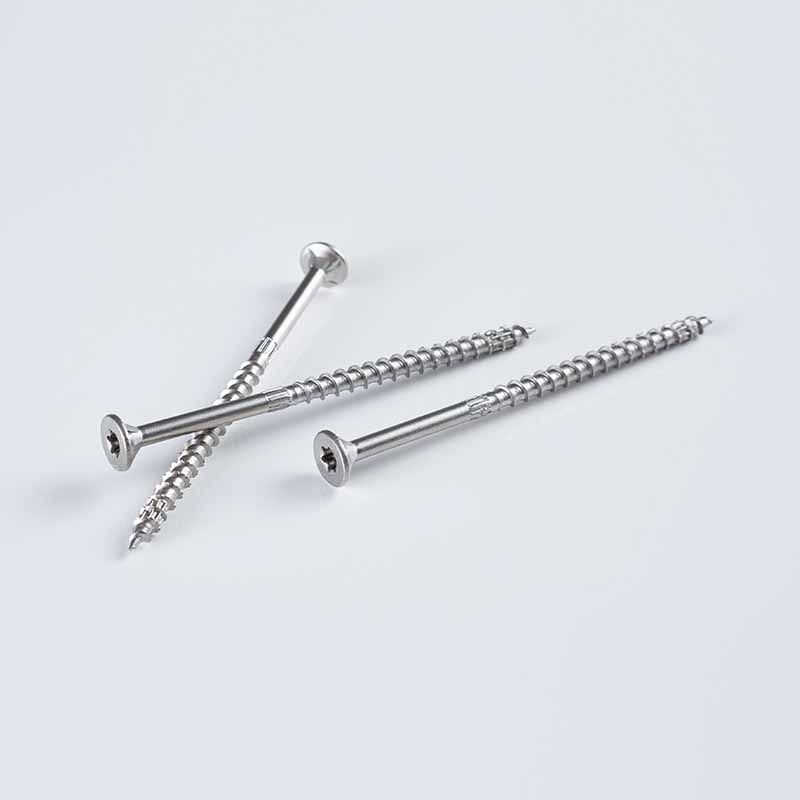
Drive recess follows the tooling. Phillips is universal but cams out under load; square and Torx recesses such as T17, T20, T25 and T40 transfer more torque into the screw, which matters when a crew drives hundreds of screws a day and every bit change is downtime. Hex heads take a socket and suit heavy gauges and impact drivers.
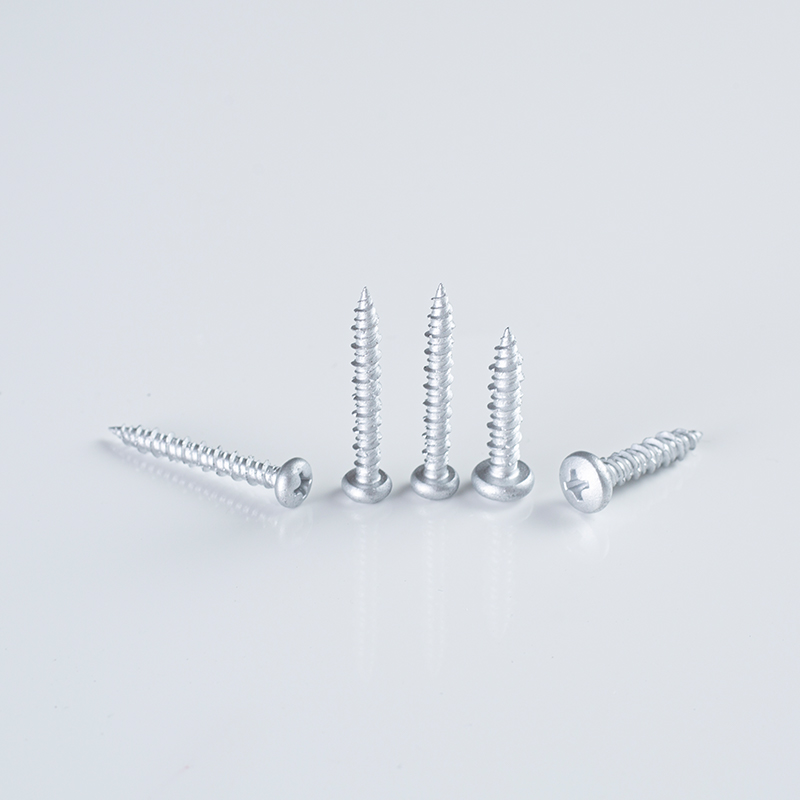
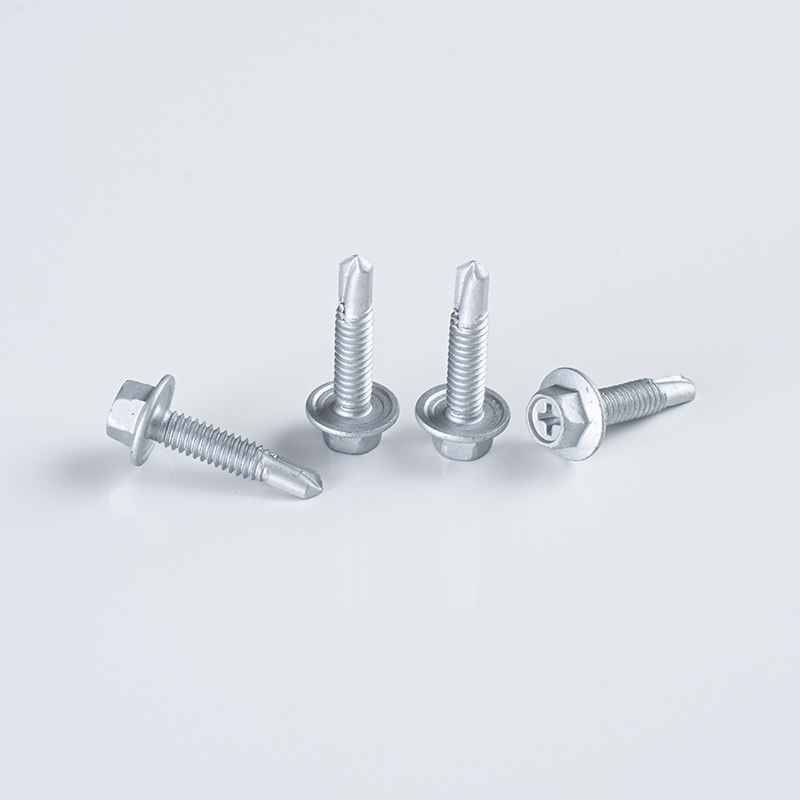 10-24x25 Ruspert Silver Hex Washer Head Self-Drilling ScrewCarbon steel self-drilling screw with Ruspert silver finish and hex washer head, placed beside notes on drive recesses and plated finishes.View Product →
Carbon steel bodies with a plated finish cover dry interior work, and that plating is a sacrificial layer. Yellow zinc and blue-white zinc are the everyday options; black phosphate offers almost no corrosion protection and belongs indoors only.
Where moisture is permanent, the coating does the work. Zinc-nickel, Ruspert (quoted at 500 h or 1000 h salt spray) and Dacromet (quoted at 1000 h) are specified for exterior cladding, roofing and vehicle assemblies. Stainless steel removes the coating question entirely: 304 (A2) for general outdoor work, 316 (A4) for coastal and chemical exposure, and 410 where a harder, more abrasion-resistant screw is needed for board and drywall.
Dry interiorOutdoorCoastal / marine
Two installation habits destroy otherwise correct coatings: over-torquing, which shaves plating off under the head, and pairing a stainless screw with a carbon steel washer or panel, which creates a galvanic couple that corrodes faster than either part alone. On marine and outdoor projects, the screw, washer, head and base material have to be read as one assembly rather than separate line items.
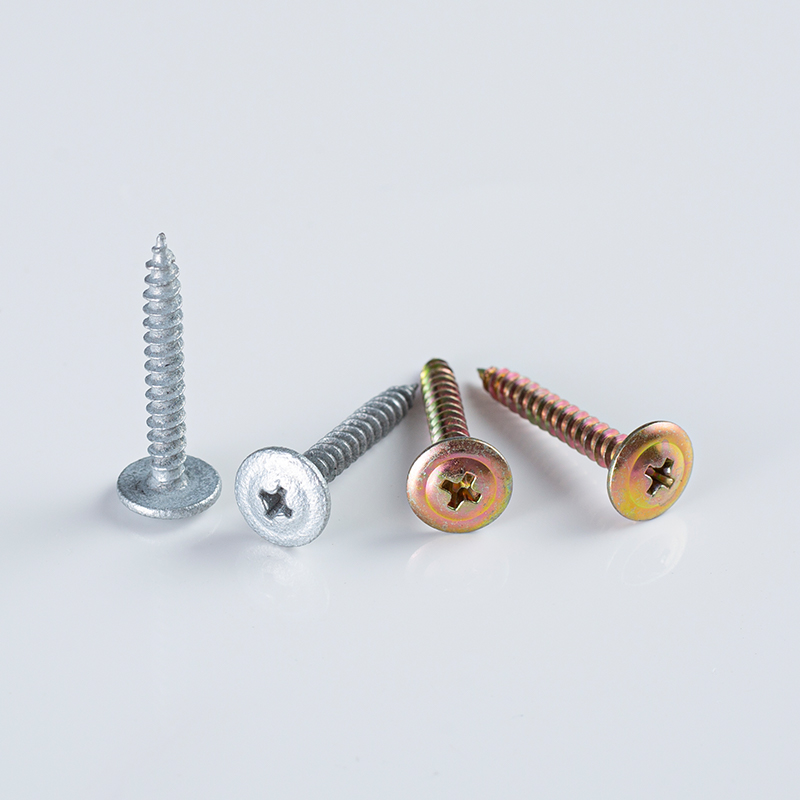
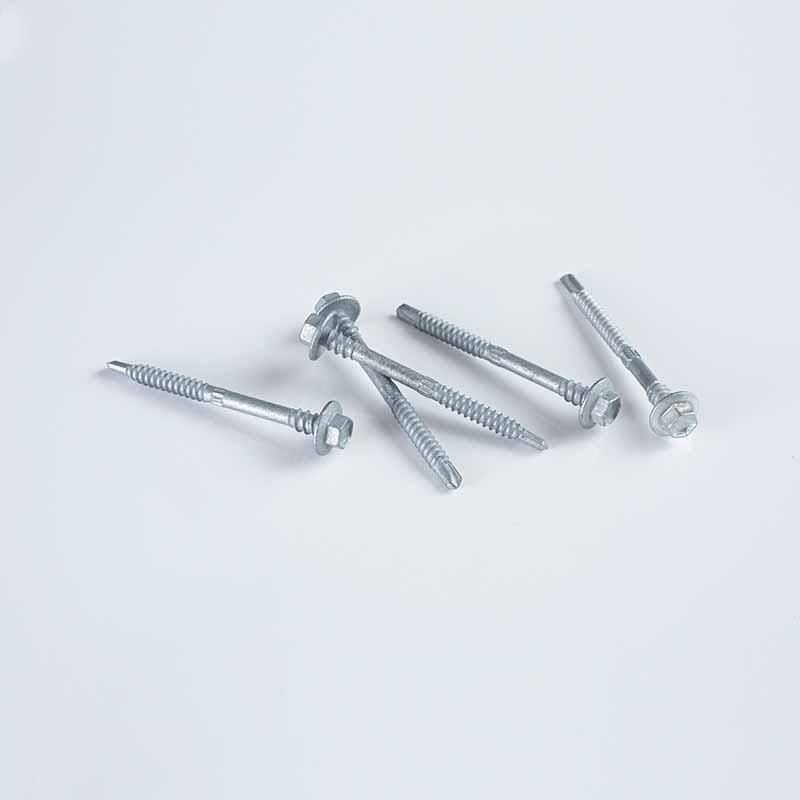 TG Hexagon Head Self-Drilling Screw with EPDM Washer 12-14x35-53 CL3Hexagon-head self-drilling screw with EPDM washer, relevant where screw, washer, head and base material are treated as one assembly.View Product →
A self-tapping screw forms its thread in a hole that already exists or that the material gives it, while a self-drilling screw cuts its own hole. On the same assembly the difference shows up as pilot-hole time, extra drill bits and rework, so it is worth confirming which one the drawing assumes. When labor is the deciding cost, the comparison between self-tapping and self-drilling screws usually settles the argument.
Add up every layer the drill has to pass through, then pick a point rated above that total. A 2.5 mm panel over a 1 mm frame sits comfortably in the No. 2 range, while a 6 mm bracket calls for a No. 3 or No. 4 point.
Measure the completed joint, including washers and any compressed gasket, and choose a range that brackets that figure. A screw whose grip range starts above your stack will never clamp it, and one that ends below it will bottom out.
Yes, particularly for wood-to-steel work with winged points. In very thin or dry hardwood, a standard drill point can split the timber, so pre-drilling or switching to a dedicated wood screw is the safer call.
316 (A4) stainless for coastal and chemical exposure, 304 (A2) for general outdoor use, and carbon steel with Ruspert or Dacromet rated at 1000 h salt spray where stainless is not practical. Pair exterior screws with EPDM washers and avoid black phosphate entirely.
Run every order past the same four checks: does the point beat the total thickness, does the grip range bracket the stack, do the head and drive suit the tool and the finished surface, and does the coating survive the environment it is going into. Suppliers who quote point, thread, head, drive and coating as one line item take most of the risk out of the purchase, and a sample box on site is usually cheaper than a rework visit.

+86 15856352820

malingfei@linghongscrew.com

No. 56, Baishizhan Road, Economic Development Zone, Langxi County, Xuancheng City, Anhui Province, China

