


 English
 Español
 Deutsch
 عربى
عربى
Home / News / Industry News / How to Use Self-Drilling Wood Screws Without Pre-Drilling: Contractor Guide
Industry News
Content
This guide covers how to use self-drilling wood screws without pre-drilling: the tip geometry that does the drilling, the materials that accept direct driving, the tool settings that prevent stripped heads, and the step-by-step sequence that keeps thread bite clean. When the technique is right, the pilot hole becomes unnecessary.
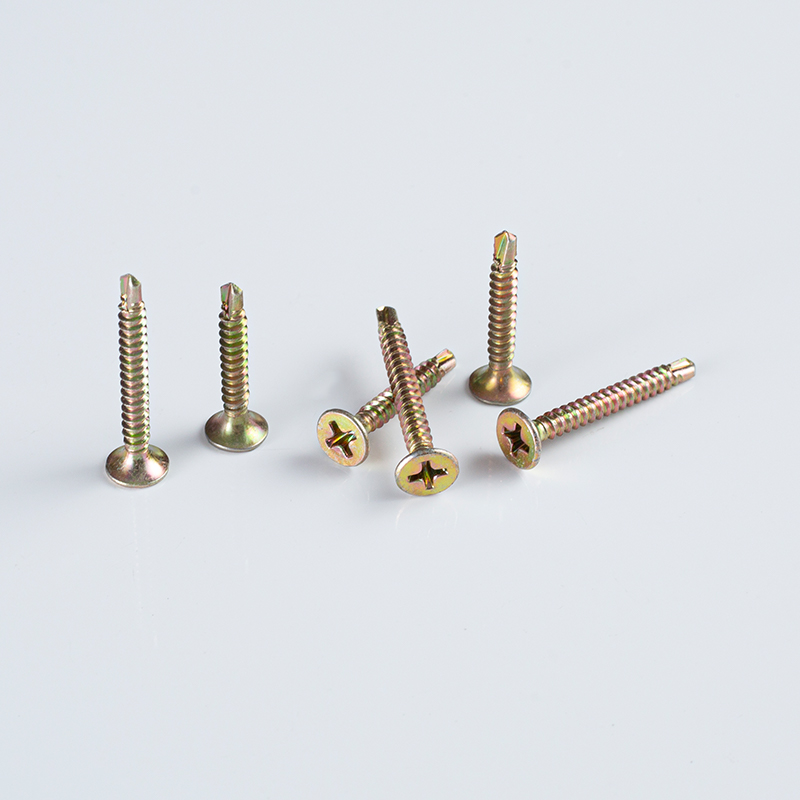
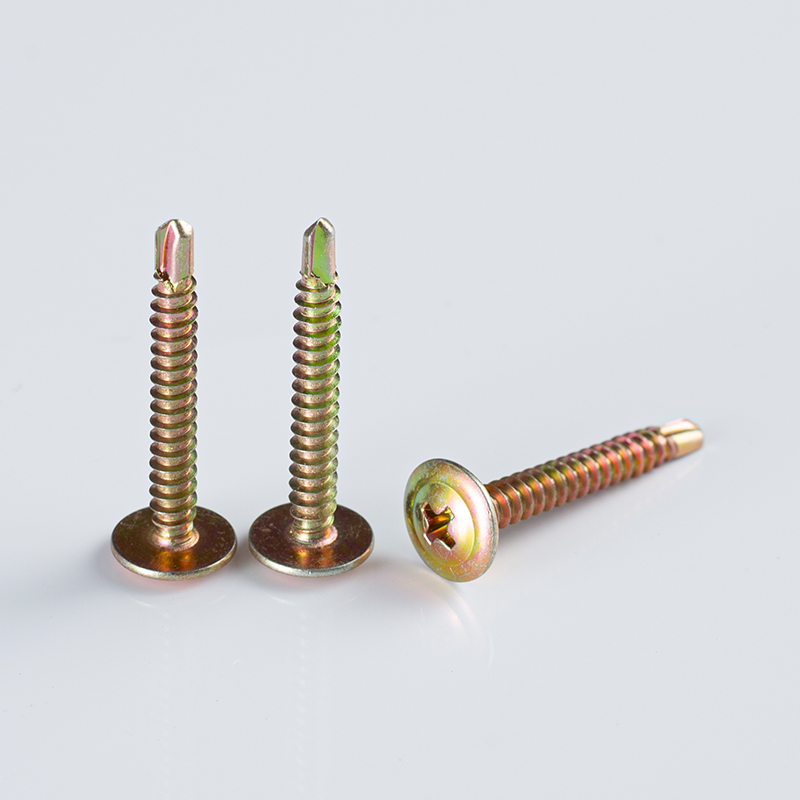
A self-drilling wood screw cuts its own pilot hole with a fluted, drill-style point, so the shank and threads follow without a separate drilling step.
The tip is a miniature twist drill with two flutes and cutting edges sized slightly smaller than the thread body. As the screw rotates, the flutes bore a pilot hole; the thread then engages the surrounding wood and pulls the fastener home. Because the hole is cut rather than forced, fibers are less likely to split, which is why direct driving works in softwood, plywood, and OSB.
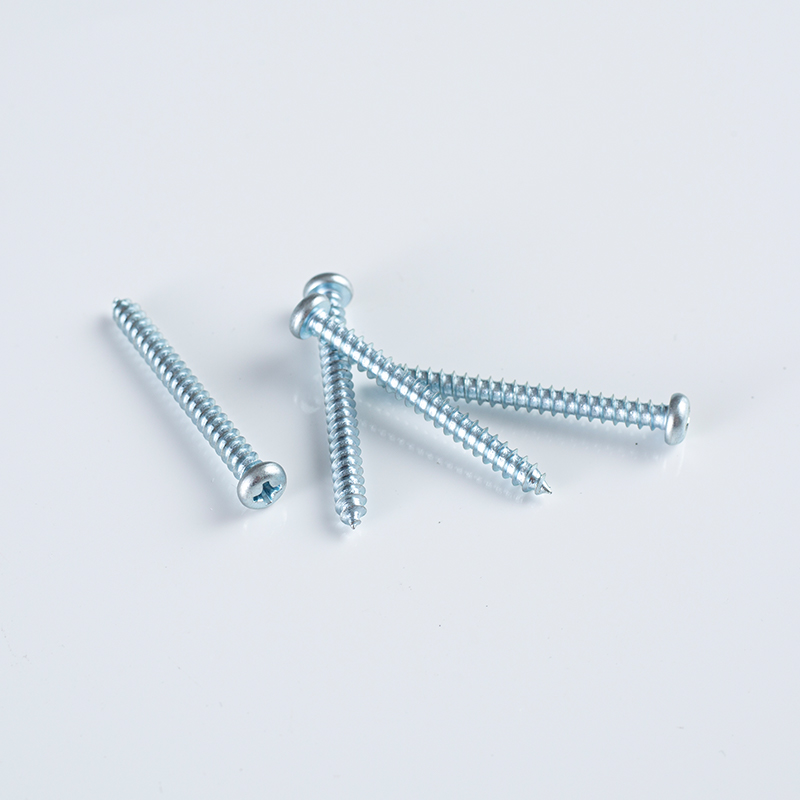
The difference from a self-tapping screw matters on site. A self-tapping point is sharp but has no cutting flutes; in dense fiber it pushes grain aside, raises torque, and usually needs a pilot hole anyway. A true self-drilling point removes material the same way a drill bit does.
Self-drilling wood screw: a wood fastener whose fluted tip performs the drilling and thread-forming steps in a single driving motion, eliminating the separate pilot-hole operation.
| Screw type | Tip geometry | Pilot hole needed? | Typical use |
| Standard wood screw | Blunt or tapered point | Yes, in most woods | Joinery, furniture, trim |
| Self-tapping wood screw | Sharp thread-cutting point | Often yes in hardwood; sometimes no in softwood | Metal-to-wood, thin panels |
| Self-drilling wood screw | Fluted drill point | Not needed in softwood, plywood, or OSB | Framing, decking, sheathing |
Skip the pilot hole in softwoods, plywood, OSB, and most composite decking; pre-drill only for dense hardwoods, end grain, and edges within one inch of a board end.
The deciding factor is density. Fiber in SPF studs, cedar, and pine cuts cleanly at 2,800 rpm, so the screw seats without help. Dense domestic and tropical hardwoods compress less, the flutes load up, and direct driving turns into burned holes and snapped shanks.
Three checks decide whether a given board can be driven directly:
Field rule: if a thumbnail cannot dent the surface, cut the speed, use a fine #2 or #3 point, and keep pressure light. If the screw still stalls, pre-drill only the first third of the shank; the point finishes the rest.
Drive self-drilling wood screws at 2,800-3,600 rpm with firm axial pressure, and let the screw head or the clutch stop the drive.
Speed is not a preference; it is physics. The flutes need cutting velocity. Below about 1,800 rpm the point skates across the surface instead of biting, and the screw wanders off its line. Above the range, in hardwoods, friction burns and glazes the hole walls.
Impact drivers are the fastest option for #10 and #12 self-drilling screws because the impacts deliver the axial energy the point needs without extra body weight on the tool. Drill/drivers work well in high gear with the clutch near maximum. Auto-feed screw guns at 4,000 rpm handle collated self-drilling screws on production decks, provided the depth nose stays clean.
Contractor's rule: a rounded bit ruins more self-drilling screws than any wrong point angle. Replace a bit the moment it slips in a screw head.
Hold the driver perpendicular, press firmly, and let the fluted point cut before the threads engage; a typical drive takes about three seconds.
Match the screw to the material. Use a #2 point for softwoods and plywood; switch to a #3 point for denser species. The threaded shank must reach at least 1 inch into the base layer.
Seat the bit fully. A half-seated bit loads the recess off-axis, which strips heads on the first few screws.
Align perpendicular and apply steady pressure. Start at full speed; the flutes bite and pull the screw down.
Let the flutes clear the chips. Do not pull back; a constant feed rate keeps the point from clogging in deep framing stacks.
Ease off at the end. When the head is about 1/4 inch from the surface, feather the trigger and stop flush, or slightly countersunk for bugle-head truss screws.
Do not rock the driver. The flutes are directional; once the point is buried, keep the tool axis straight. Rocking widens the pilot hole and the thread loses its bite, producing the same loose join you were trying to avoid.
Eliminating pilot holes lifts an installer's output from about 45 screws per hour to 100-130 screws per hour, roughly a 2.5 times gain with no extra crew.
The savings compound beyond raw speed: no drill-bit swaps between pilot and drive, fewer drill bits consumed, and far fewer split board ends that need replacement. On the 600-screw deck benchmark, the difference is about seven to eight crew-hours, worth roughly $500 at a loaded labor rate of $60 per hour.
600 screws, one installer: 13.3 hours with pilot holes versus 4.6 hours with an impact driver and self-drilling wood screws - about eight hours returned to the schedule from one setup change.
Three mistakes cause most field failures: driving too slowly, leaning onto the tool, and substituting self-tapping screws in materials that need a true drill point.
Correct technique produces a clean joint every time; incorrect technique produces the exact symptoms pre-drilling was supposed to solve: splits, wandering threads, and stripped heads.
| Mistake | Symptom | Fix |
| Speed under 1,800 rpm | Point skates; screw wanders off line | Set drill/driver to 2,800 rpm or use impact mode |
| Leaning onto the driver | Bent shank; stripped recess | Keep axial pressure firm, not forced |
| Wrong point for hardwood | Smoked hole; jammed flutes | Use a #2 or #3 point; pre-drill dense species |
| Worn driver bit | Cam-out; rounded heads | Replace bits; keep one fresh bit per crew |
| Self-tapping screw substituted | High torque; split fibers | Confirm the fluted drill point before driving |
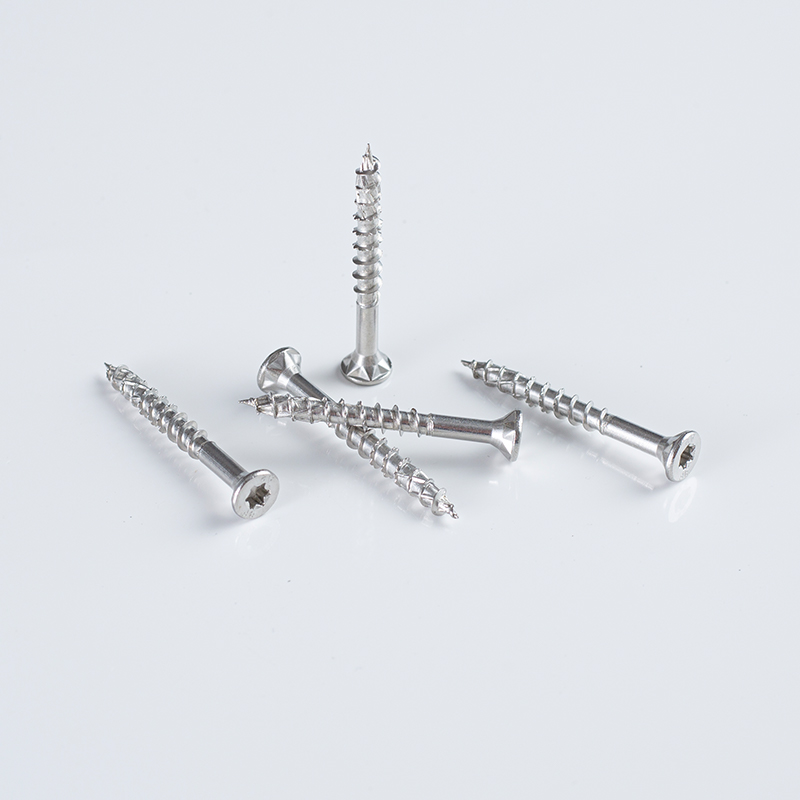
Sourcing note: fastener quality shows up in the same step. Manufacturers such as Anhui Linghong Hardware Technology Co., Ltd. build self-drilling wood screw families in carbon steel and stainless steel so a contractor can match the fastener to the treatment: carbon steel for interior framing, stainless steel for exterior cedar or ACQ decking. A brittle, case-hardened screw snaps regardless of technique.
No. They eliminate it in softwood, plywood, OSB, and most composite decking. In dense hardwood, MDF, and end grain, pre-drill the first third of the shank or reduce speed; otherwise the point burns and the head may snap.
Yes. An impact driver at 3,200-3,600 rpm is the fastest common option for #10 and #12 screws in framing lumber. Keep the bit fully seated, apply steady axial pressure, and feather the trigger as the head seats.
A self-drilling screw has a fluted drill point that cuts the pilot hole before the threads engage. A self-tapping screw has a sharp point but no flutes; it forms threads but often needs a pilot hole in harder wood. Only the self-drilling type reliably skips the pilot-hole step.
Check speed (above 2,800 rpm), axial pressure (firm, not forced), and screw length (threaded shank at least 1 inch into the base layer). Persistent snapping usually points to case-hardened screws from a low-cost batch; specify consistent hardening and documented material grades.

+86 15856352820

malingfei@linghongscrew.com

No. 56, Baishizhan Road, Economic Development Zone, Langxi County, Xuancheng City, Anhui Province, China

