Self Tapping Screws for Metal, Plastic, and Wood Assemblies
As a dedicated Self Tapping Screw manufacturer, Anhui Linghong Hardware Technology Co., Ltd. produces a full range of thread-forming and thread-cutting screws that eliminate pre-tapping and speed up production lines. Our screws are engineered for sheet metal, plastic, light-gauge steel, and wood applications, with head styles, drive systems, and surface treatments matched to your assembly environment.
We operate a 12,600 m² factory in Anhui, China, with over 80 production lines and a stable monthly capacity of 500 tons. Our in-house quality team uses metallographic polishing and Rockwell hardness testing to verify case depth and core toughness on every batch, so you receive fasteners that drive consistently and hold under vibration.
Our Self-Tapping Screw Range
We supply self-tapping screws in carbon steel and stainless steel, with head geometries and point styles selected for specific substrates and installation tools. The table below shows the main categories and their typical fit.
| Category |
Material / Finish |
Typical Application |
| Carbon Steel Self-Tapping Screws |
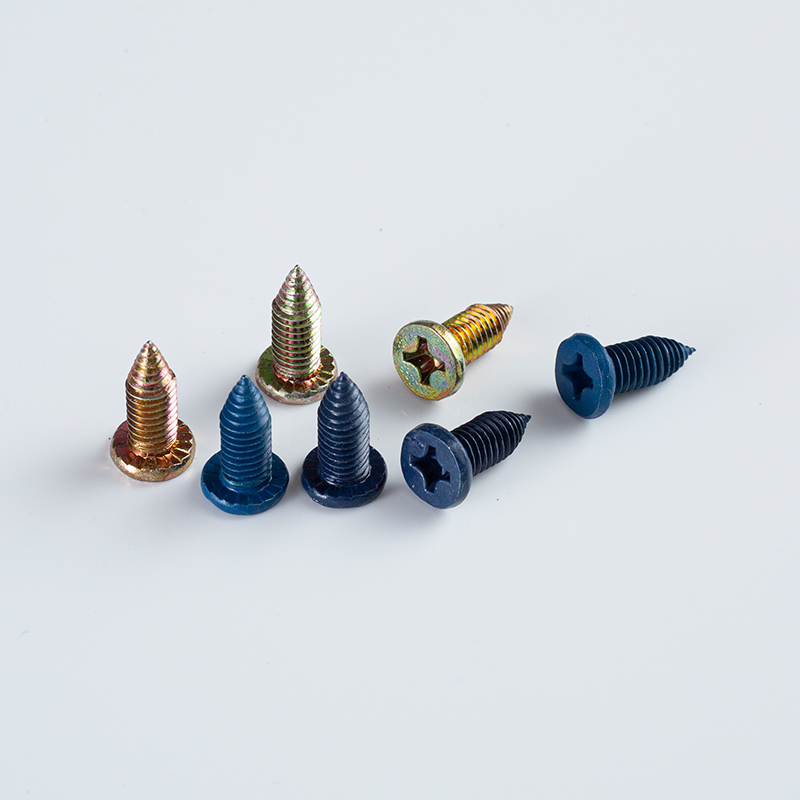
Carbon steel with yellow zinc, blue-white zinc, mechanical zinc, or Ruspert |
Metal-to-metal, plastic, and wood assemblies requiring high strength and corrosion resistance |
| Stainless Steel Self-Tapping Screws |
304, 316, 316L stainless steel |
Outdoor, marine, and corrosive environments where long-term reliability is critical |
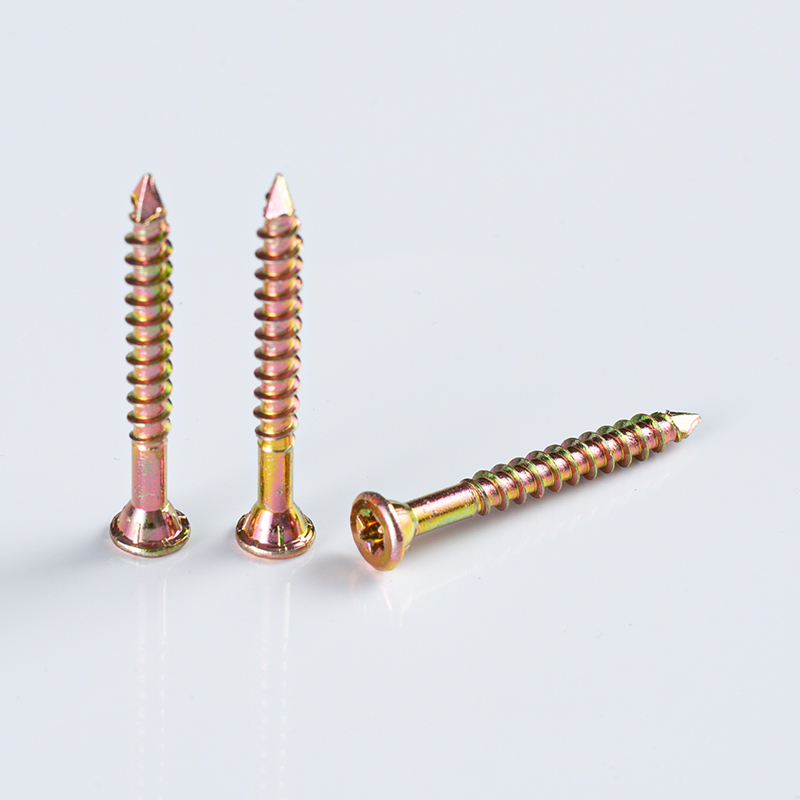
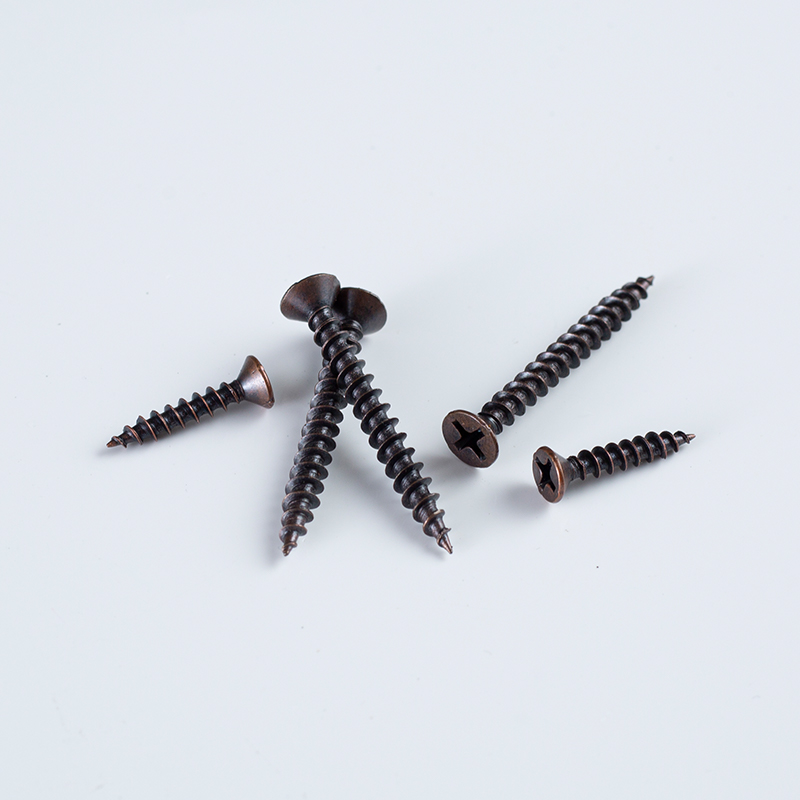
| Bugle Head Self-Tapping Screws |
Carbon steel or 304 SS; black phosphate, colored zinc, blue-white zinc |
Drywall, gypsum board, MDF, and decorative panels; countersunk finish for smooth surfaces |
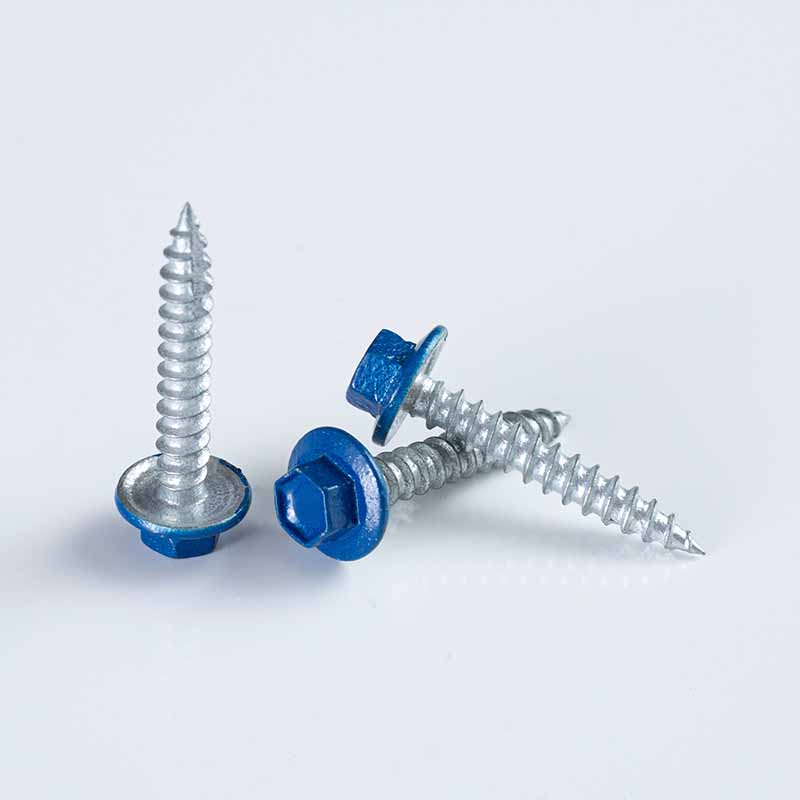
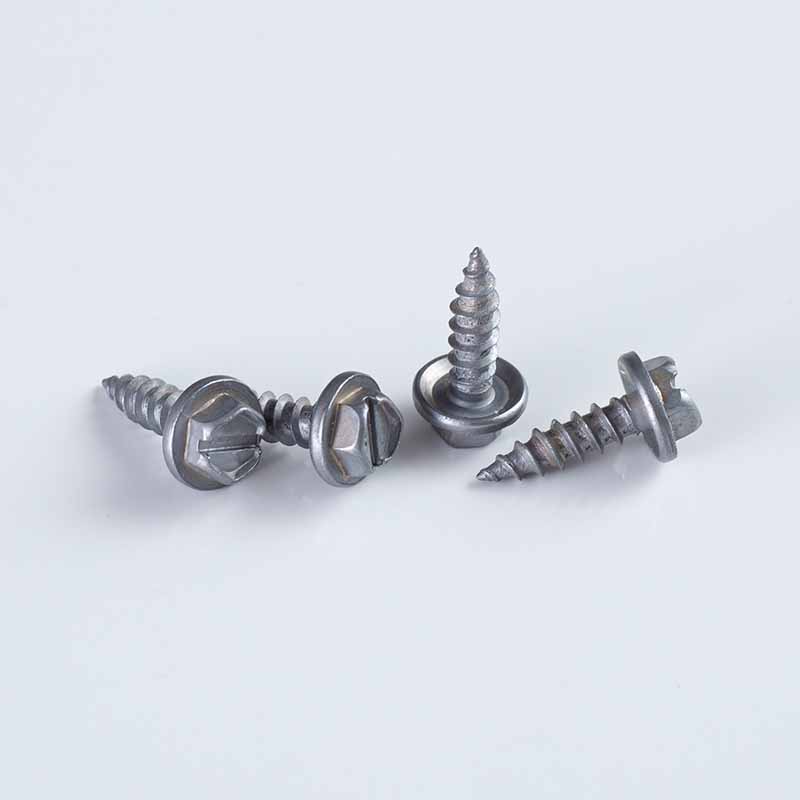
| Hex Head Self-Tapping Screws |
Carbon steel with painted or plated finishes |
Structural steel, roofing, and heavy equipment where higher torque is applied |
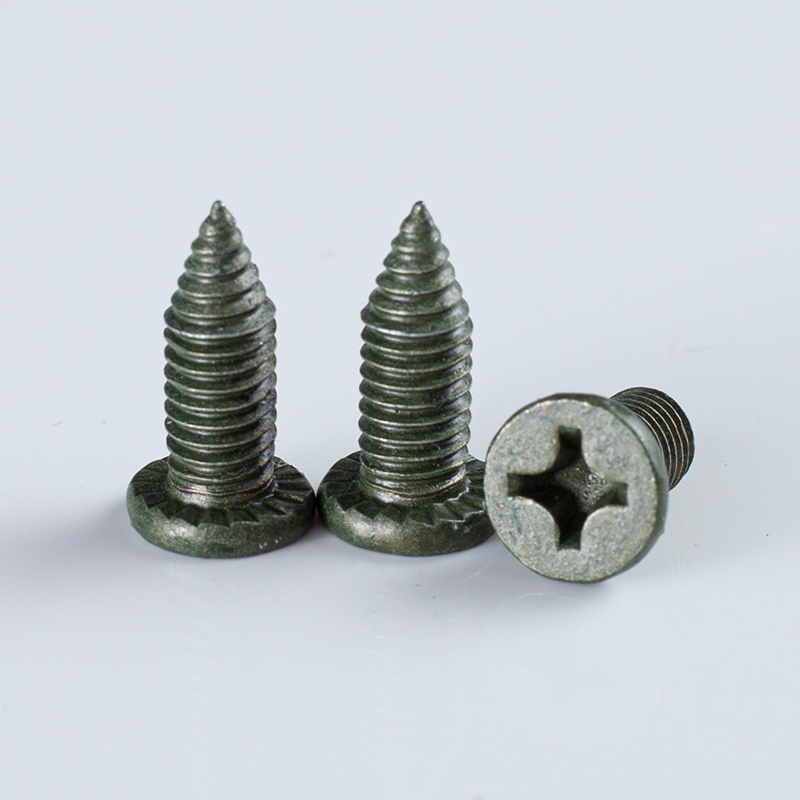
| Countersunk Head Self-Tapping Screws |
Carbon steel or stainless steel |
Applications requiring a flush surface, such as hinges, trim, and electronic enclosures |
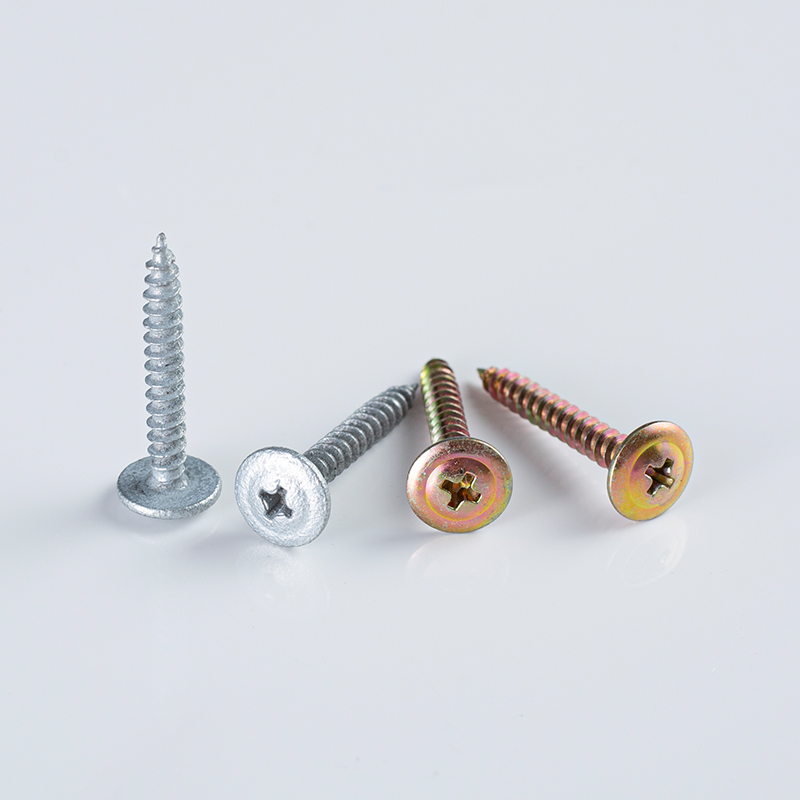
| Wafer Head Self-Tapping Screws |
Carbon steel or stainless steel |
Cladding, panels, and applications where a larger bearing surface is needed |
| Button Head Self-Tapping Screws |
Carbon steel or stainless steel |
Low-profile fastening for furniture, appliances, and consumer products |
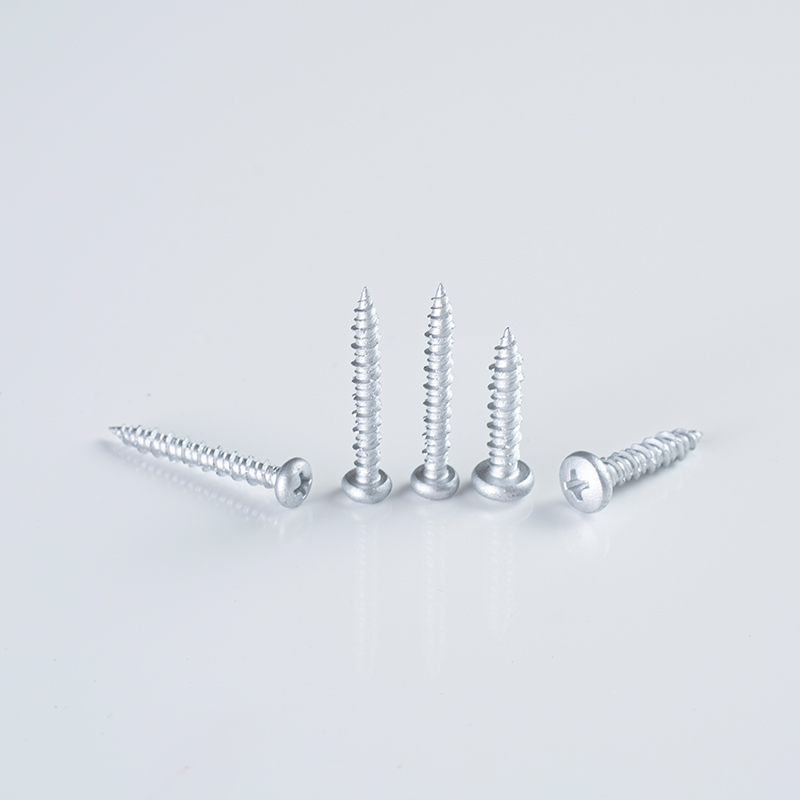
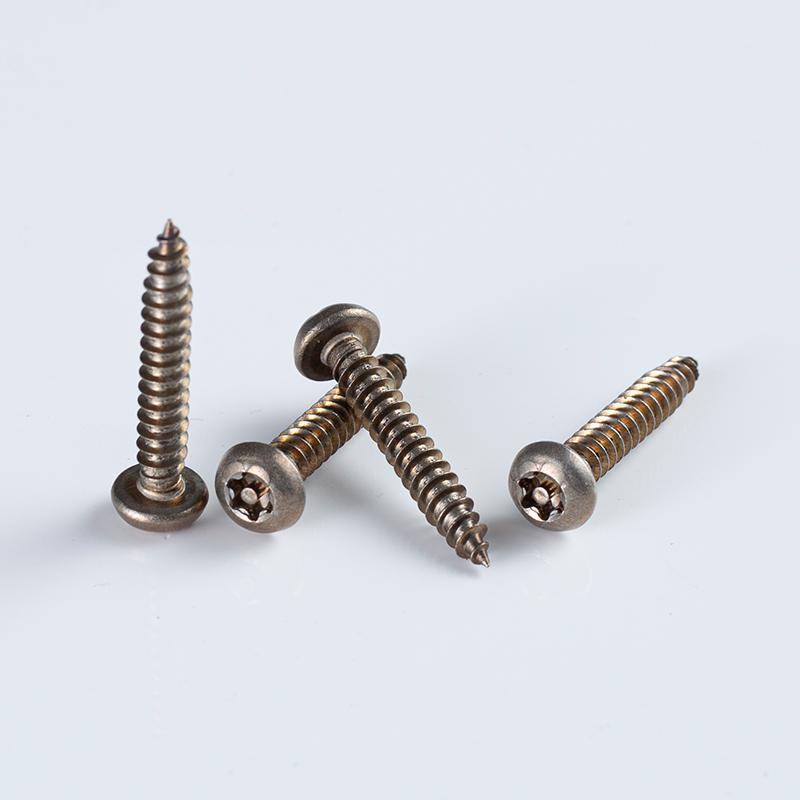
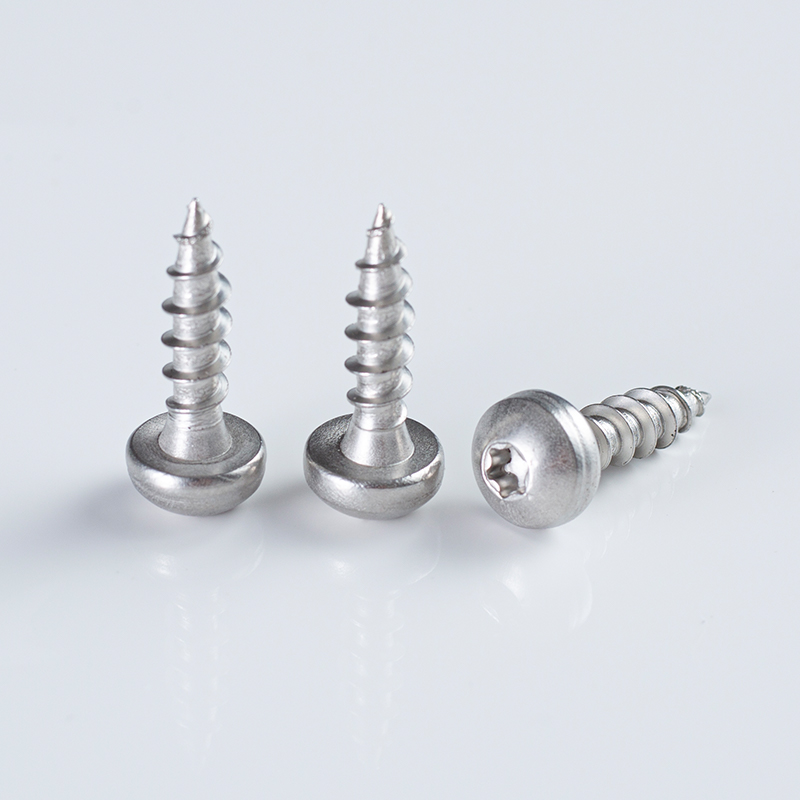
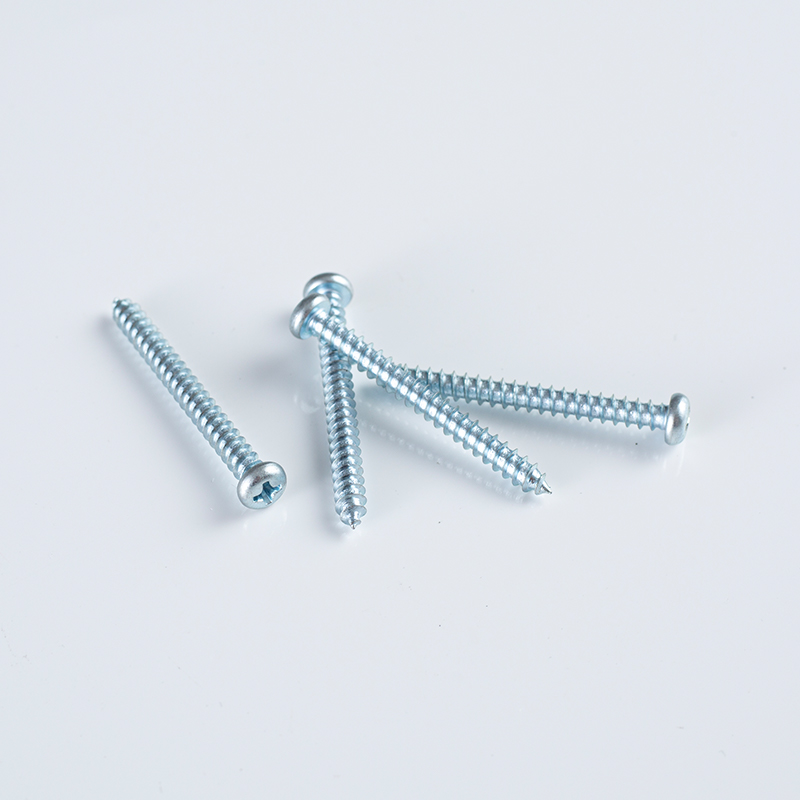
| Pan Head Self-Tapping Screws |
Carbon steel or stainless steel |
General-purpose fastening in metal and plastic assemblies |
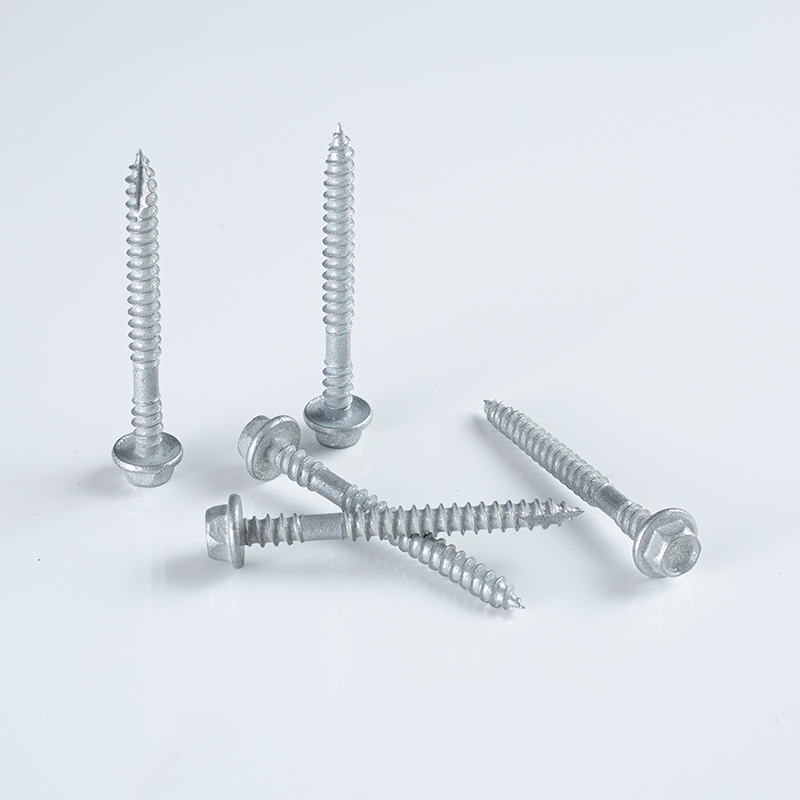
| Self-Drilling Self-Tapping Screws |
Carbon steel or stainless steel with drill point |
Metal-to-metal fastening without pre-drilling, ideal for steel framing and cladding |
Thread-Forming vs. Thread-Cutting: Which Do You Need?
Self-tapping screws fall into two broad families. Thread-forming screws displace material to create a tight, stress-resistant thread, best for ductile plastics and thin sheet metal. Thread-cutting screws have a cutting edge that removes material, making them suitable for thicker metal, die-castings, and harder plastics where forming would cause cracking.
Our range includes both types, with sharp points for soft substrates and drill points for metal. We also offer specialized thread forms like Hi-Lo for plastics and triangular-point designs that reduce driving torque and prevent splitting in wood.
Material and Finish Selection
For indoor assemblies where cost is a priority, carbon steel with zinc plating provides adequate corrosion protection. For outdoor or high-humidity environments, we recommend stainless steel grades 304 or 316, or carbon steel with a Ruspert or mechanical zinc coating for extended salt-spray resistance.
- Carbon steel: High strength, cost-effective, available with yellow zinc, blue-white zinc, black phosphate, or Ruspert.
- Stainless steel: 304 for general corrosion resistance; 316/316L for marine and chemical exposure.
- Surface treatments: We match the coating to your required salt-spray hours and torque consistency.
Head Styles and Drive Systems
Head geometry affects both installation speed and final appearance. Bugle and countersunk heads sit flush, while pan, wafer, and button heads provide a low-profile bearing surface. Hex heads allow higher torque transfer for structural connections.
Drive systems include Phillips, Pozidriv, Torx, and tamper-resistant Torx. For automated assembly, we can supply screws with collated strips or in bulk packaging that feed reliably into your existing screwdrivers.
Quality Control and Testing
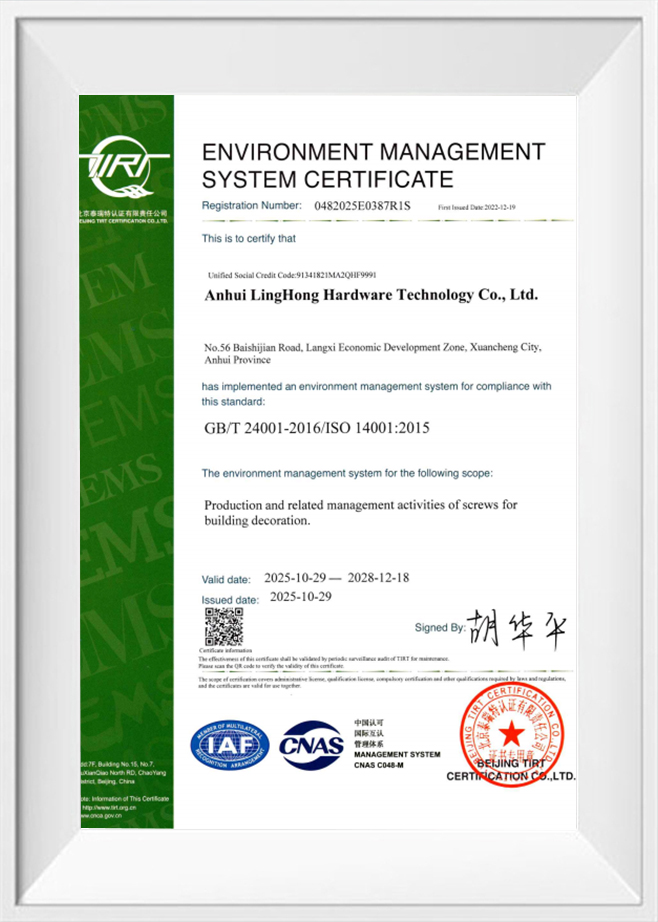
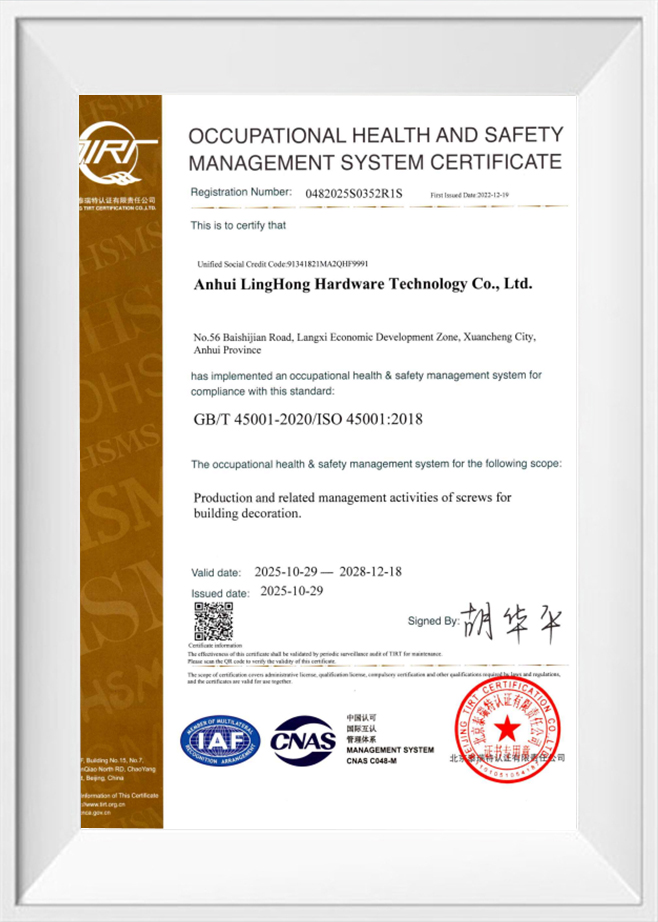
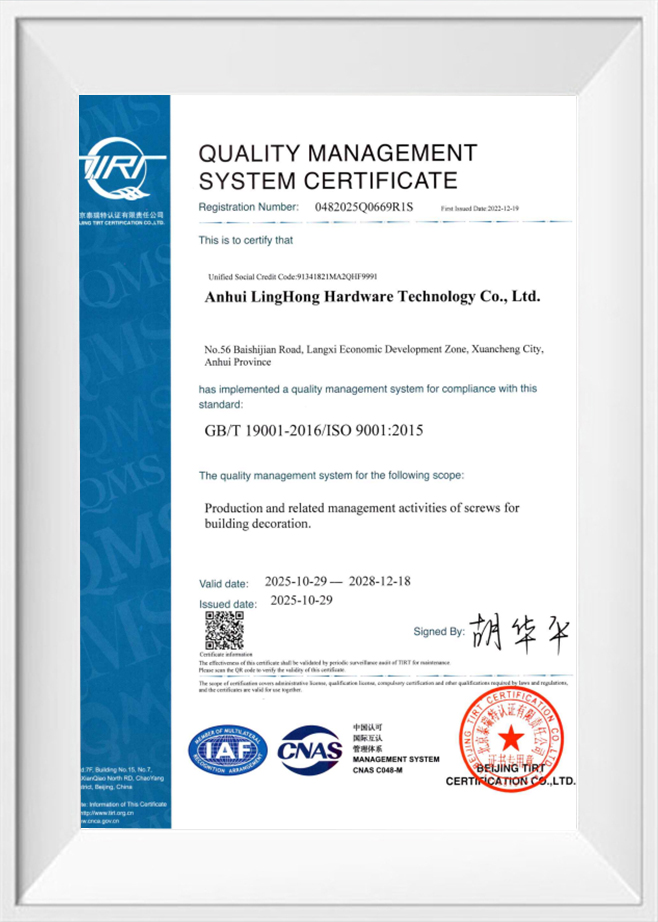
We operate under ISO 9001, ISO 14001, and ISO 45001 certified systems. Every production batch undergoes first-piece inspection, in-process patrol checks, and final ex-factory testing. Our lab uses metallographic polishing to verify case depth and Rockwell hardness to confirm core toughness, ensuring screws resist stripping and breaking during installation.
We also perform salt-spray testing on plated samples to validate corrosion resistance, and torque testing to confirm that the drive recess and head geometry meet your installation tooling requirements.
Customization and OEM Support
We support non-standard customization, including special lengths, thread pitches, point styles, and head markings. Our engineering team works from your drawing or sample to produce a screw that meets your dimensional and performance specifications.
For high-volume projects, we can also adjust packaging—from small boxes to bulk cartons or palletized loads—to match your line-side handling and distribution needs.
Information We Use to Configure Your Solution
To prepare an accurate quotation and production plan, we need the following details:
- Substrate material: Metal type and thickness, plastic grade, or wood species.
- Thread size and length: Diameter, pitch, and overall length in metric or imperial units.
- Head style and drive: Pan, countersunk, hex, etc., and Phillips, Torx, or other drive.
- Point type: Sharp point, drill point, or specialized cutting point.
- Material and finish: Carbon steel or stainless steel grade, and required coating.
- Quantity and packaging: Annual volume, order frequency, and preferred packaging.
- Application environment: Indoor or outdoor, exposure to moisture or chemicals.
FAQs
What is the difference between self-tapping and self-drilling screws?
Self-tapping screws cut or form threads in a pre-drilled pilot hole. Self-drilling screws have a drill point that creates the hole and taps the thread in one operation, eliminating the need for pre-drilling. We offer both types; choose self-drilling for metal-to-metal applications.
Can you match a specific head or drive requirement?
Yes, we produce custom head styles, drive recesses, and point geometries. Send us a drawing or sample, and we will confirm feasibility and produce a prototype for your approval.
What surface finishes do you recommend for outdoor use?
For outdoor exposure, we recommend stainless steel 304 or 316, or carbon steel with a Ruspert or mechanical zinc coating. These provide high salt-spray resistance and long service life.
How do you ensure consistent quality in large orders?
We follow ISO 9001 procedures with first-piece inspection, in-process checks, and final testing. Our lab equipment verifies hardness and coating thickness, and we keep batch records for traceability.
What is your typical lead time for custom screws?
Lead time depends on the complexity and quantity. For standard items, we can ship from stock or within a short production cycle. For custom orders, we will provide a confirmed schedule after receiving your specifications.



 English
 Español
 Deutsch
 عربى